Two Blind Men, Entry #40

The blind men came to him, and Jesus said to them, “Do you believe that I am able to do this?” They said to him, “Yes, Lord.” Then he touched their eyes, saying, “According to your faith be it done to you.” 

And their eyes were opened. 

Matthew 9:28-30, (context vv. 27-31)

I remember reading a story; more like a sanctified fable but maybe containing a bit of truth? The story (possibly from a French poem?) was that wherever Jesus would walk flowers would bloom in His footprints. I suppose the idea was that wherever Jesus went–life, healing and wholeness happened. It was His footprints; His presence that brought out the very essence of the Kingdom of God.

The love Jesus has for us is that wonderful. His grace–a grace that heals and forgives, a grace that’s now flourishing in the heart of a every real disciple. His mere presence brings us flowers even in the hard times.

Without Him, it seems we’re stuck with plastic roses that really don’t impress anyone. They aren’t real.

Jesus heals these blind men. They are completely without sight. They have understood nothing but blackness, but that is about to be instantly changed, it will come like a switch is flipped. Pop! Instant sight. Suddenly everything floods in. They “see” everything for the first time. Imagine, to be sightless, and then to suddenly see. Colors, trees, flowers, faces, and Jesus all at once. Can you imagine what that must be like?

These men had to have faith–that ‘spiritual ability’ to step out and grasp a healing that hasn’t come yet. They first need to trust the man (Jesus) before the healing can ever be received. “Do you believe I can do this…” I suppose the issue here is identity, the Lord Jesus Christ declaring His authority over this blindness. He intends to heal. It’s His nature to heal.

Wherever Jesus chooses to walk, supernatural things happen. We’re called to trust the person of Jesus, to simply believe Him, and expect Him to keep His word; but whatever happens, happens. Believers will choose to continue to believe, no matter what. They know the difference between real and plastic flowers.

I believe in Jesus’ character–His absolute love for me, and His power over everything. I love Him, and I look for His presence, and suddenly amazing miracles happen. But it’s Him–it’s all Him, and I must put my faith in Him. He does all the work, I’m the lazy guy leaning on my shovel.

But He wants to heal us, that’s His nature. My feeble faith can move things. My mustard seed faith can elevate mountains. It makes wonderful things happen. But that faith has to be fortified, cemented into His heart– we must tell of Jesus’ kindness and mercy and love for those still lost. We must believe in Him to touch others, and then whatever might happen after that will always be His decision. He will always be the Lord either way.

“When human reason has exhausted every possibility, the children can go to their Father and receive all they need. … For only when you have become utterly dependent upon prayer and faith, only when all human possibilities have been exhausted, can you begin to reckon that God will intervene and work His miracles.”

-Basilea Schlink


Simply the Hem, Entry #39

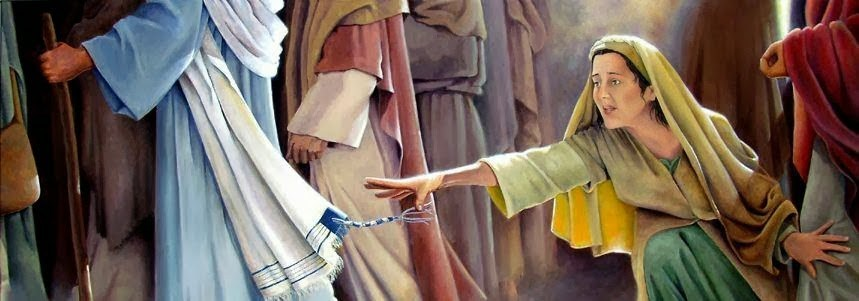
“Just then a woman who had been subject to bleeding for twelve years came up behind him and touched the edge of his cloak. 21 She said to herself, “If I only touch his cloak, I will be healed.”

22 “Jesus turned and saw her. 

“Take heart, daughter,” he said, “your faith has healed you.” And the woman was healed at that moment.”

Matthew 9:20-22

I really don’t have a faint idea of her sickness. But I think to bleed constantly must’ve been tiring. Physically, and emotionally–exhausting. She had to ‘plan’ her days carefully to accommodate all of this. Things were never easy for this woman. It truly crippled her life; it would’ve consumed her.

This Jewish woman was suffering with an issue of blood for 12 long years. She had sought help from one physician after another, and spent all her money paying doctor’s bills. But she had not been helped. In fact, her problem got worse. And we need to remember, that she’d be completely ostracized socially–a total write-off, a reject.

Leviticus 15 explains this:

Anything she lies on during her period will be unclean, and anything she sits on will be unclean. 21 Anyone who touches her bed will be unclean; they must wash their clothes and bathe with water, and they will be unclean till evening. 22 Anyone who touches anything she sits on will be unclean; they must wash their clothes and bathe with water, and they will be unclean till evening. 23 Whether it is the bed or anything she was sitting on, when anyone touches it, they will be unclean till evening.

(vv. 19-23)

Fourteen years of being unclean; it seems like a half of a lifetime. She was cut off from any solace of the Temple–that would’ve denied her a sacrifice for her sin. Not only was 14 years a long time, her physical disease had powerful implications spiritually as well. She would have carried around her sin like a heavy coat. She would never know the peace that infuses grace.

Her only hope was Jesus, plain and simple. His reputation as a healer and a teacher had spread like crazy through the country (even King Herod followed His ministry!)

She had one overriding desire. Nothing but a healing would be acceptable.

Perhaps Jesus had already passed by her? After all, He was on His way to a simple resurrection! But in her thinking, she could still touch Him, perhaps she just stretch out and grab the tassel of His robe. And guess what; she was healed, completely. A lightening strike!

We don’t bleed, but we sin all the time.

All of us are like this woman. We don’t bleed, but we sin all the time. Romans states, “we all have sinned, we all have fallen short of the glory of God.” Isaiah graphically describes all of us “to be like and unclean thing.” The Hebrew word for those two words is “menstrual cloth.” All the good we do amounts to something less than zero.

Each of us have definitely sinned. We’re very much ‘defiled’ even at our very best. Sin has completely ruined us. We are foul.

We must reach out, and keep reaching out, grabbing a hold of Jesus. We must seize Him, even if it’s a tiny tassel of His robe. We must snatch it and never let go; until He heals us and restores our lives. We know He can.

“Christ is the Good Physician. There is no disease He cannot heal; no sin He cannot remove; no trouble He cannot help. He is the Balm of Gilead, the Great Physician who has never yet failed to heal all the spiritual maladies of every soul that has come unto Him in faith and prayer.”

-James H. Aughley

Gonzo Faith, Entry #38

He said to them, “Why are you so afraid? Have you still no faith?” 

Mark 4:40 (context vv. 35-41)

Often fear rules the human heart. Quite suddenly the waves seem too high, and the wind starts to really howl. We look at our circumstances and we freak out by what we see. Things look grim, and often we imagine the worse is going to happen. Fear has its sharp hooks in us; and everything is starting to get really crazy.

Jesus often zaps us at times like this. When our boat is pitching violently in open seas, we’ve lost our anchor and the sails are useless, it’s then we start looking around to find where we put our life-jackets. We choose this approach rather than calling out to Him.

It seems that becomes our last option–to beg Him to come and save us. (We can get so stiff-necked sometimes. I think it really is a pride/humility issue.)

Faith is probably the most significant part of this verse. It’s faith in Him that screams out of our storm. When faith shows up, fear leaves. We get one or another. I suppose it’s always going to come to this–will it be fear or faith? We must grasp this lesson, hopefully sooner rather than later. The storm is how the Kingdom of God gets worked into the human heart.

“Faith expects from God what is beyond all expectation.”

-Andrew Murray

“Have you no faith?” That’s Jesus’ interesting question to His believers who are about die. Crazy! But know this, these tempests will never be random or capricious. His love has absolute control over each of them. All He wants is that His disciples will see a truly powerful love, that really does save.

Calling on Him must become our first reaction, and not the fifteenth.

We’ll learn to do this first eventually, even if it means repeating the lesson over and over and over, until faith becomes our first response. Jesus often uses a bad storm to put the Kingdom even deeper inside of people. “Have you no faith” isn’t so much as an indictment of you, as it’s a deep and concerned observation. And only the storm can reveal your faith.

Mothers and Brothers, Entry #37

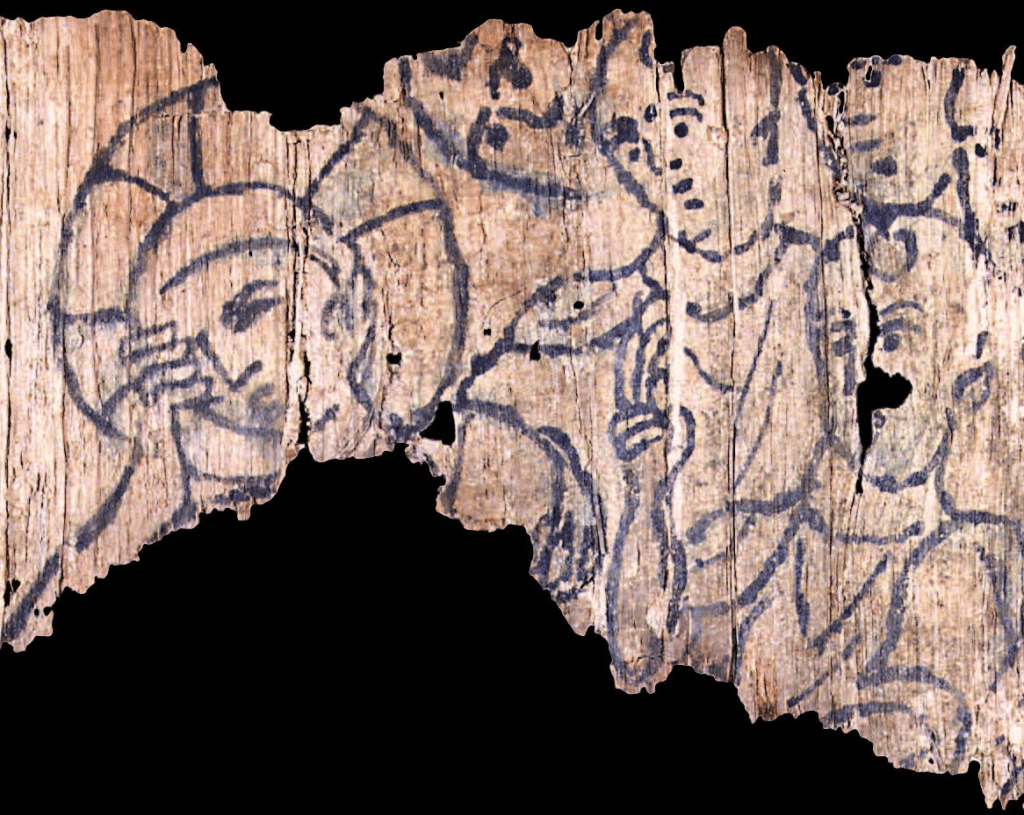
Jesus Papyrus, jerusalemperspective.com

49 And stretching out his hand toward his disciples, he said, 

“Here are my mother and my brothers! “

“For whoever does the will of my Father in heaven is my brother and sister and mother.”

Matthew 12:49-50, (context, vv. 46-50)

His family is spiritual. Earthly connections aren’t what really matters, Jesus expresses an important understanding of the Kingdom of God. Things are not evaluated by physical relationships anymore. Life is different now.

I don’t think Jesus has gone out of His way to alienate His earthly or physical connections to His family. I don’t think He is being rude or uncaring. That isn’t part of His thinking. And yet He does seem to point to something that’s more permanent and everlasting.

It isn’t enough to be His brother, or cousin or uncle. These things really don’t matter. What does matter is being part of His spiritual family. To be painfully honest, it seems to me anyway, that the spiritual relationship is what truly counts. Being Jesus’ disciple, and doing the Father’s will for us transforms us and lifts us up to family ‘status.’

But it doesn’t strictly matter “how” you relate to Jesus so much, but how you do the will of God. That is what impresses Jesus. That’s what He communicates to those who are standing around Him. Do you really understand what is family? Can you grasp the idea that doing the will of God now makes you authentic?

They say “blood is thicker than water.’ Jesus’ blood unites us to Him and each other! Doing the Father’s will turns us into His family.

We must reach out and grab this concept–we are family if we do the will of God, believe in His sacrificial work and immerse ourselves into His purposes. We become His family, spiritually anyway, when we start to do what He wants for us. Am I doing what He wants for me at this moment, or the next, or the next?

Are we really part of His family, or is someone else our father?

“The purpose of the Bible is simply to proclaim God’s plan to save His children. It asserts that man is lost and needs to be saved. And it communicates the message that Jesus is the God in the flesh sent to save His children.”

– Max Lucado

Forgiveness Finds a Place at Simon’s Table, Entry #36

“And Jesus answering said to him, 

“Simon, I have something to say to you.” 

And he answered, “Say it, Teacher.”

Luke 7:40, (context, 36-40)

This has to be one of my favorite passages of scripture. Simon, who is a Pharisee, has invited Jesus for dinner. I suppose he intends to impress Him, or at the very least he wants to Jesus to look more favorably on his religious sect. It’s simple PR work for him. (Maybe even tax deductible?)

But in comes this woman, and she spoils everything. The ESV translation describes her as a “sinner” and a “woman of the city,” (whatever that means?) She bursts into the dining room wielding an alabaster flask of ointment. She kneels and weeps, and uses the locks of her hair to rub the perfume on the dirty feet of Jesus.

She is crying, and I have to believe she’s very aware of her sin–nobody has to tell her that she has wasted her life. Simon, on the other hand, finds her behavior with Jesus quite objectionable. He’s obviously disturbed by her presence, and he only can only see her outside actions, his vision never really extends to see her broken heart.

And yet Jesus is quite aware of the tension that’s now developing. He’s spiritually sensitive to all that’s swirling around Him, and we see Him jumping at the chance to teach Simon (the Pharisee) a lesson on true forgiveness.

It seems that a certain moneylender had two men that owed him money. One was indebted with just a modest sum; the other was bound by a huge debt. It seems that both men couldn’t repay what they had borrowed. So inexplicably, the lender cancelled the debt of both of them, the little and the big. These men were now free. They owed nothing–not a red cent.

OK now. Who will “love him more?”

Jesus compares the responses of these ‘ex-debtors’ and takes it to a very logical conclusion. “Who will love him more?” Simon obviously understands this line of reasoning, and we hear him responding correctly to Jesus’ lesson on mercy and grace.

Simon realizes there are those out there who are terrible sinners, they are wicked and have walked in sin and darkness for a very long time. They’re irrevocably stained by their sin, it has shaped them to the point that their personalities have been altered. Sadly, they know all of this, and it breaks their heart in two. They tell no one, but God knows.

The schooling Simon receives is the Kingdom logic that corrects his definition of God’s mercy. The kindness that God bestows on us is proportional, those who “owe” much are forgiven much. And as a result they love much.

When you see a person weeping at the altar, overcome by their sense of sin and they seem terribly broken, you’ll understand the love they now have for Jesus. A tremendous debt has been forgiven, and they get up and walk away as free men and women. They now finally understand how to love. They have been forgiven.

“The truth is that there are such things as Christian tears, and too few of us ever weep them.”

― John Stott

The Easy Yoke, Entry #35

“Come to me, all who labor and are heavy laden, and I will give you rest. Take my yoke upon you, and learn from me, for I am gentle and lowly in heart, and you will find rest for your souls. For my yoke is easy, and my burden is light.”

Matthew 11:28-30, (context, vv. 25-30)

I have thought some on these two verses; I’ve come to the conclusion that it really must be understood as a holy ‘invite.’ A gracious bidding to come to Him, to find much needed rest, and discover meaningful work. This is a gentle summons to blend both rest and work and then live it out in our lives.

Jesus is aware of my weak and faltering steps. I stumble a lot, I weave and trip often. Yet He never criticizes me, He finds no fault, but matches His steps to mine. On His own, Jesus could do the work much faster. But He insists we stay yoked, connected with each other. This amazes me.

The moment we do this we’ll understand that the combination of these two will always balance and correct us. It will pour out of us love, grace and gentleness. The fruits of the Spirit can be seen, and we become salt of the earth.

He invites us to come and be yoked, and to enter into true rest, and true work.

“Thou hast created us for Thyself, and our heart is not quiet until it rests in Thee.”

-St. Augustine

A Definite Drunkard, Entry #34

Please think about this image for a second

“The Son of Man came eating and drinking, and they say, ‘Look at him! A glutton and a drunkard, a friend of tax collectors and sinners!’ Yet wisdom is justified by her deeds.”

Matthew 11:19, (context, vv. 16-19)

What part does excessive “eating and drinking” don’t we understand? It doesn’t seem entirely ‘religious,’ especially in the thinking of us who observe the life of a pastor or a shepherd. We demand a certain restraint, a standard of separateness from common sinners. That’s seems to be our personal view anyway.

Is gluttony wrong? Is getting a bit tipsy also unacceptable, especially when it comes to “true” religion? Quite often it seems, we have a pious approach toward what we think is ‘true’ faith. We often believe that truth equates to being an ascetic, separate from common sinners. We believe if we are truly holy we will segregate from the ungodly.

It seems that Jesus doesn’t relate to, or accept this viewpoint. He’s single-mindedly serving the Father, in perfect holiness and in true connection with Him. And yet we see Him cavorting with tax-collectors and sinners. We observe Him actually sitting with those we reject as ungodly or unholy.

I must say this before you start looking for rocks to stone me with!

Scripture clearly tells us that we’re to live holy lives. We’re to be wise and have self-control in everything. We should always remember our own ‘black hole’, and begin to see our new life as really incredible. We must allow the “fruits of the Spirit” to grow inside us. And lived rightly, it’s a place of real holiness; and certainly not the ‘pretend’ righteousness of the Pharisee.

Listen very carefully: The Pharisees reject and label those who seem to flaunt the religious norms, but broken believers will truly forgive others, like those who have been radically forgiven themselves. There is a stark difference.

But think about it, aren’t we all a tiny bit ungodly?

Don’t we somehow grade people by their outward appearance and the level of their attainment? It absolutely astounds me that Jesus seems far more comfortable with the outcasts than He does with the Pharisees of His day. He sits with them, and eats and drinks in a fashion that we would regard objectionable.

Jesus loves every person. He loves the unmade, and the unvarnished. He loves being with the ungodly. Yes, He does understand the awful nature of sin; the horrible damage it inflicts on a person’s soul. And yet I’ve come to the conclusion that all my righteous and holy religion is nothing but a very bad smell in God’s nostrils.

Jesus isn’t afraid that we will somehow taint Him by our words, conduct or behavior. He passionately loves those who we deem as outside the norm of our religion. Jesus loves being with ‘nasty’ people. I think He purposefully seeks out the wrong ones!

It fascinates me that Jesus is never afraid that the leper will corrupt or defile Him. He isn’t fearful that somehow He will be contaminated. That’s exactly what the Pharisees thought. But instead it’s the reverse with Jesus. He heals us, and it’s always a one-way current. He touches us, but we’ll never ‘poison’ Him!

Just maybe our awful failure in evangelism is due to our inability to really relate with the lost. We withdraw and then wonder why the unsaved don’t understand the things of God. Have we become so religious that sinners don’t feel comfortable with us, or Him? Could it be that we’re a bit off course? Are we really filled with His Spirit?

“The greatest form of praise is the sound of consecrated feet seeking out the lost and helpless.”

-Billy Graham

Please, Don’t Be Offended, Entry #33

“And blessed is the one who is not offended by me.”

Matthew 11:6, (context, vv. 2-6)

Being “blessed” is much more than having lots of money, a nice home or a fancy new car. First and foremost being blessed must be a spiritual word–it seems sometimes we have to rescue the true definition and then bring back its real meaning. The old hymn exhorts the enriched Christian to “count your many blessings, name them one by one.” Singing this will work something inside us.

We become spiritually prosperous when we begin to embrace the reality of Jesus–His words, actions, even His very person becomes the dearest thing we could ever dream of possessing. We’re also blessed when we receive deep inside us the many challenging things He says. We really must absorb these harder words without any reservations. It seems that He doles these things out very carefully.

We have to admit that being scandalized over Him is always a possibility. It can happened to a pastor, or a ‘newbie’ in the faith. No matter who we are, we’re always in the arena, being watched, and our faith in Jesus will be tested. Is it real? Will we be insulted or affronted by the presence of the Lord Jesus Christ? That dear one, it a very real possibility.

Jesus still offends people. There were those who embraced Him, and yet it seems to me that most ended up resisting and rejecting Him. He was a ‘wrench in their machinery,’ an obstacle in their theology. He was constantly doing things that didn’t seem right or proper.

Does Jesus offend you?

“When Jesus came to earth, demons recognized him, the sick flocked to him, and sinners doused his feet and head with perfume. Meanwhile he offended pious Jews with their strict preconceptions of what God should be like. Their rejection makes me wonder, could religious types be doing just the reverse now? Could we be perpetuating an image of Jesus that fits our pious expectations but does not match the person portrayed so vividly in the Gospels?”

-Philip Yancey, “The Jesus I Never Knew”

Cold Water, Entry #32

“And whoever gives one of these little ones even a cup of cold water because he is a disciple, truly, I say to you, he will by no means lose his reward.”

Matthew 10:42, (context vv. 40-42)

People are empty, desperate and spiritually dead. I once served Jesus as a “street preacher” in the inner-city of San Francisco. Over and over, I saw the heavy darkness of the city. I was the ‘point-man’ who led a team of believers who were training to do church on the street. Once a dedicated pastor-friend told me he believed that a cult a day was born there. What pain that must bring to God!

People have a tremendous need. They’re waiting, and they are desperately thirsty, and I witnessed it first hand. I saw every weird aberration of truth that floated through the hearts of lost people. At times I began to understand the broken heart of God, and it hurt me inside. I never asked for it. But sometimes He gives it to those who are trying to follow Him.

So, we hand out cold water. We give it to His followers without considering if they’re worthy of it. We freely serve it to Jesus’ “littlest” disciples. Stature in our eyes means zero to God, and yet it somehow means everything to us. Often His grace comes through the small hands of another child of God. That’s the way it’s suppose to work anyway.

“Give, and it will be given to you. Good measure, pressed down, shaken together, running over, will be put into your lap. For with the measure you use it will be measured back to you.”

Luke 6:38, ESV

Rewards will be given. They come to anyone who dares to reach into the life of another. The giver will always be seen by our Lord– everything we do, or don’t do, is lovingly observed by Him. This simple cup of water now has eternal consequences. We can hardly believe it, but it’s true.

“There are many of us that are willing to do great things for the Lord, but few of us are willing to do little things.”

-D.L. Moody


Being Worthy of Jesus, Entry #31

“Whoever loves father or mother more than me is not worthy of me, and whoever loves son or daughter more than me is not worthy of me. 38 And whoever does not take his cross and follow me is not worthy of me.”

Matthew 10:37-38 (context, vv. 34-38)

It’s funny, but we never realize that the challenges of following Jesus are never more than the cost of not following Him. The cross leads to death, most certainly. But let’s never forget that there is a resurrection that does happen after that death. We’ll never live unless we die first.

The problem is that we don’t want to die!

We cling to our lives with the intensity of a drowning man clinging to a ‘life ring.’ We dare not let go. We dare not simply give up and really call out to Jesus. We hang on to the old life, and as a result, will never, ever experience the new. We believe that we will really drown. We are afraid.

Jesus is demanding from us a preeminent love for Him. A love that ‘nullifies’ anything earthly; a love that surpasses anything “good and proper.” He wants it all! There will be no competition, no contesting our love for Him. Jesus is either all, or He will be nothing.

Yes, there is a “cross.”

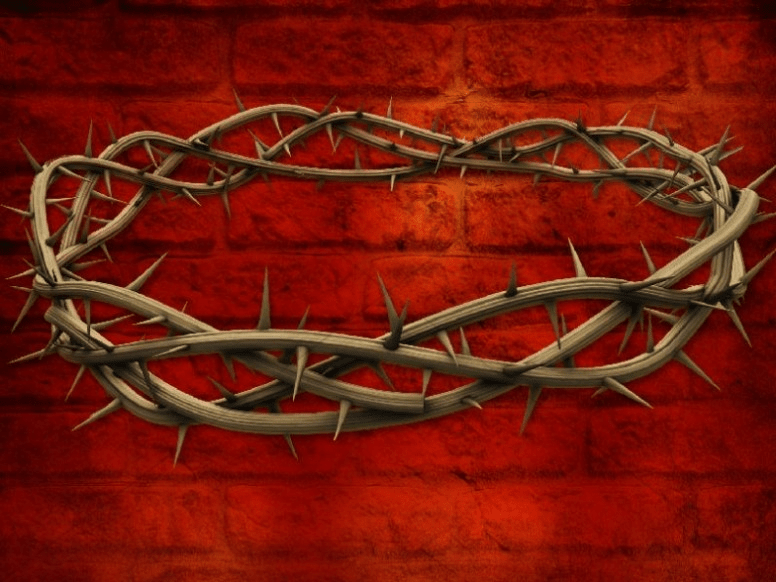
There will be a awful terrible death to everything we think brings us life. The “disciples” understood crucifixion. A Roman general once did it to the members of a Jewish rebellion. He lined the highways with 2000 crosses, to declare the iron-clad sovereignty of Rome.

Yes, the disciples knew. They remembered the horrifying deaths of so many. They undoubtedly passed by these insurrectionists who hung on these crosses and died. They vividly understood that a cross wasn’t a piece of jewelry, but it meant an awful bloody death of a human being. They knew. The cross was gruesome.

Following Jesus means this kind of death.

It ends everything dear to us. It irrevocably ends life as we know it. Life now consists of having a first love, a renouncing everything else that we hold dear. The relationships we thought were good, are now stumbling blocks to the path to our cross.

Yes, there is always a resurrection. Life will be given back to us. But death comes first, and it is incredibly painful. Sometimes we preach and teach, we embrace a “resurrection” life that excludes a cross. We jump right into a Christianity that has circumvented a terrible death. We are now officially, “cross-less Christians.”

“Unless he obeys, a man cannot believe.”

-Dietrich Bonhoeffer