“Centurion” Faith, #25

Jesus said to him, “I come and heal him.”

Matthew 8:7 (context, vv. 5-13)

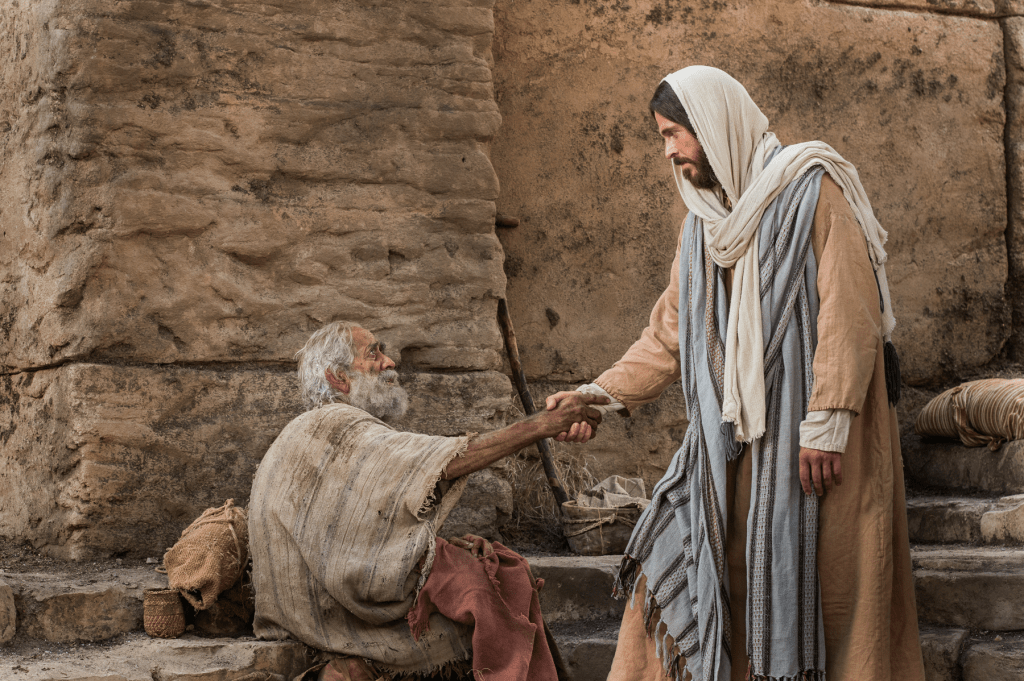
See the remarkable faith of a Roman centurion. Can we really fathom the deep depth of such belief? He comes to Jesus with a desire for the healing of a servant. He was doing something that a Gentile would never stoop to do. He sought the healing from a homeless itinerant teacher who happened to be a Jew.

This Roman soldier was an enemy. They occupied the land of Israel. If Jesus decided to withhold a healing (to make a point) this was the time! I’m guessing that His refusal would be a good lesson to the disciples, and the watching crowds.

Although the numbers under the command of the centurion varied, he commonly oversaw up to 6,000 men. In battle, they took position in the very front, they were expected to be the first over a wall or through a breach. The centurion was responsible for every aspect of his men. Every centurion of Rome was expected to display ultimate courage on the battlefield.
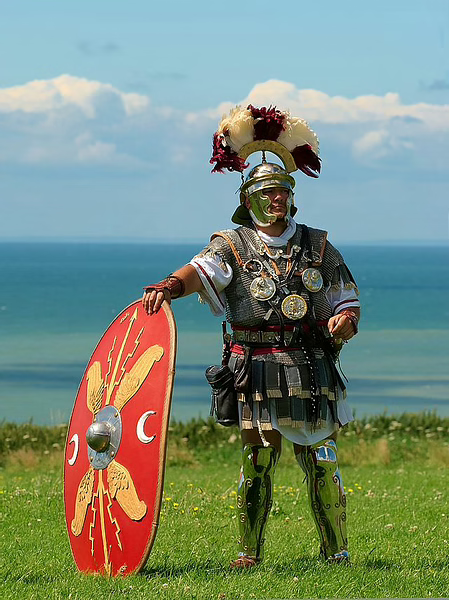
Typically it took 15-20 hard years to become a centurion. Service was very difficult, living conditions were rough at best. The centurion was not married, he had no family. To be a centurion’s servant you would be responsible for every aspect of his master’s needs. But most of all, the servants became the centurion’s only family. They stayed with him for the duration of his service.

I suppose this explains much. The servant was paralyzed. The text in Matthew says that he was suffering terribly. No doubt the centurion sought out doctors and treatments, but apparently this didn’t help. He was at wit’s end and really didn’t know what to do. I suppose being helpless will often turn people to Jesus.

Jesus seems to have developed a reputation. Those in need, the desperate, sought out His healing power. It seems like that He was now becoming famous for His ability to heal diseases. It’s interesting but scripture clearly shows that Jesus really didn’t want to be this famous. He repeatedly told people not to tell anyone about their healing.

We can see the centurion’s respect for rank and authority.

He explains his own authority over his own soldiers. When he commands he is obeyed without question. He recognizes command and leadership. This man fully understands, and he clearly acknowledges the ultimate authority of Jesus Christ.

When Jesus heard this, he was amazed and said to those following him,” 

“Truly I tell you, I have not found anyone in Israel with such great faith.”

Matthew 8:10

Emulating this man’s faith is the true task of every believer. We must continually put ourselves under the authority of Jesus. His lordship is to be supreme. His rule over us should never be questioned. He commands everything, and we must obey without any reservation. This new depth of faith must now become our true calling.

A couple of observations. 1) There exists a “quality” kind of faith in comparison to a weaker faith. There seems to be degrees of faith. 2) Quality faith recognizes the true authority and supreme lordship of Jesus. 3) Quality faith can be seen in very strange places. 4) This quality faith is meant to be sought and imitated. It is meant to be recognized by every disciple.

“Just as a servant knows that he must first obey his master in all things, so the surrender to an implicit and unquestionable obedience must become the essential characteristic of our lives.”

-Andrew Murray   

Leaving the Mat Behind, Entry #23

“When Jesus saw him lying there and knew that he had already been there a long time, he said to him, 

“Do you want to be healed?”

John 5:6 (context, vv. 2-9)

He’d been sick for 38 very long years. On this day he was laying like usual in his spot by the pool of Bethesda. He doesn’t realize it, but he was about to encounter Jesus. His life, as he knows it, is about to be turned upside down.

The question Jesus asks is pointed, and it savagely confronts him–“Do you really want to be healed?” Sometimes the sick, the injured, the handicapped become so aware of their issues that they can’t see any life beyond them. Perhaps Jesus wanted to jolt this man with this very odd question; of course he wants to be healed– doesn’t he?

Jesus clearly knew what was happening.

The Lord knew that this man must make a decision, and healing would only come if he could leave his mat behind. Before we get too hard on him though, we should consider that 38 years is a long, long time to be sick. One thing he had learned over time was that having any kind of hope was a very dangerous thing. In these many years he had worn out lots of mats.

Apparently, an angel would come and stir the waters; the first one who somehow jumped in would be healed. Over time the pool became the gathering place where there laid “a multitude of invalids—blind, lame, and paralyzed” (v. 3.) Someone once said that ‘misery loves company.’ The odds for healing however, were definitely not in their favor.

I’m somewhat curious, not so much with the ‘angel/pool’ thing, but with the Lord passing by a crowd of sick people. Jesus didn’t stop and just wholesale heal them, but instead He makes a bee-line to where this man lay. Why did He do this? Perhaps an encounter with Jesus was far too radical for the crowds; perhaps they weren’t ready. IDK.

The question Jesus asks does seem strange– “Of course he wants to be healed.” And yet the Lord (and this man) had to know for sure. It really isn’t a question of Jesus’ healing power–it is however, an issue with one’s desire to be made whole, and then to leave his mat behind.

A disclaimer though.

People will often talk about having enough faith to be healed, and that’s well and good, but what about having faith to continue to be sick; day after endless day? Will we continue to believe in Him no matter what happens to us? I do wonder about this sometimes.

“How sweet the name of Jesus sounds, In a believer’s ear! It soothes his sorrows, heals his wounds, And drives away his fear.”

-John Newton


Mercy for My Sin, Entry #19

“And behold, some people brought to him a paralytic, lying on a bed. And when Jesus saw their faith, he said to the paralytic,” 

“Take heart, my son; your sins are forgiven.”

Matthew 9:2 (context vv. 1-8)

This man needed a touch. But more importantly he had to know that he was forgiven. It seems to me that this was his real need. Forgiveness must come first and foremost. And Jesus’ spoke directly at him. Jesus completely released him. There were no preconditions. Only the faith of his friends (v. 2.) Interesting.

“Your sins are forgiven.”

The religious leaders are very disturbed. Their analysis of this man’s forgiveness was a frontal attack on Jesus’ right to acquit sin. They said nothing, and the miracle really wasn’t even acknowledged. These leaders were in sharp contrast to those who witnessed this first-hand.

The text says that “the crowds saw it, they were afraid, and they glorified God, who had given such authority to men” (v. 8.)

The religious leaders determined that only God Himself could forgive; to let someone ‘off-the-hook’ like this. They said nothing (perhaps they were feeling ‘out numbered? IDK.)

To forgive sins is God’s exclusive prerogative. No man can release another man from sin. It has the Lord’s exclusive territory. And yet Jesus did precisely that to the chagrin of the ‘legalism’ that was running rampant in the hearts of the religious leaders .

I’m of the opinion that we’re all suffering a certain paralysis of sorts. Each of us have issues that cripple us. We each are sick, and we desperately need Jesus’ touch. “None of us is righteous” (Romans 3:10.) Perhaps Matthew 5:3-4 explains our walk knowing that we all need to be touched.

It seems that we are all dead men walking, separated from God.

The healing of this man was astonishing in itself. To miraculously heal was certainly profound. It doesn’t happen everyday. And yet these scribes, who were thinking about what Jesus said, called it “blasphemy.” They could not see the miracle that freed this man’s great burden.

“The high heaven covereth as well tall mountains as small mole hills, and mercy can cover all. The more desperate thy disease, the greater is the glory of thy physician, who hath perfectly cured thee.”

-Abraham Wright


Be Clean, Entry #18

And Jesus stretched out his hand and touched him, saying, 

“I will; be clean.” 

And immediately his leprosy was cleansed.

Matthew 8:3 (context vv. 1-4)

He lives completely devastated. Leprosy was more than physical, it had spiritual consequences. He probably had been living as an outcast for many years. When he got anywhere close to the healthy they would shout out that he was “unclean.” They were afraid of him. He was the consummate ‘boogeyman.’

Lepers were excluded from any temple services. They could never ‘sacrifice.’ They wore their sin like a heavy coat, and they were destined to wear it for the rest of their sad lives. The Jews regarded them as cursed by God; never ever to be touched by anyone. They were the damned.

Can you even imagine the awful ugliness that life had given him?

To be clean was only a wonderful dream. It evaporated when he woke; it was never, ever realized. His disease ‘stuck’ to him permanently. (He must’ve realized that it was forever and ever.) He was cursed by God to live alone, and die damned.

It throughly amazes me that Jesus reached out and touched him. Most likely he hadn’t known any human contact for many years. I think the Lord knew and understood this man’s biggest need. To be touched was a bonanza, to be healed was ‘heaven.’

What sin has hypnotized you?

What ugliness degrades your spirit? Look to Him (and His mercy) and let Him touch you deep inside. The Law insists that contamination would spread to the person who touched the unclean, but Jesus being ‘clean’ passed on His wholeness.

That’s the kind of God I serve.

“Give up the struggle and the fight; relax in the omnipotence of the Lord Jesus; look up into His lovely face and as you behold Him, He will transform you into His likeness. You do the beholding–He does the transforming. There is no short-cut to holiness.”

–Alan Redpath


A Father’s Love, Entry #15

“Jesus said to him, 

“Go; your son will live.” 

The man believed the word that Jesus spoke to him and went on his way.”

John 4:50, (context vv. 46-54).

How do you quantify the love a father has for his son? This nobleman had absolutely nowhere to go, his son was going to die and he could do nothing to stop it. He was half out of his mind with grief and desperation. There wasn’t a thing he could do to save his son. He was going to watch his boy die; and he was powerless to do anything to prevent it.

He finds Jesus and begs for a miracle. He isn’t proud or arrogant, all of that was set aside a long time ago. He’s no longer the king’s official, he is now a very earnest father who is begging for Jesus’ touch on his very sick son. It’s funny how that happens, God uses everything to break through our defenses and touch our lives.

The incredible love this man has drives him to Jesus. He cries desperately out to the Lord and we see him shamelessly begging for his son’s life. He remains insistent even after Jesus seems to turn him down. He continues to hang on to a very feeble hope that Jesus will relent. The nobleman has no other options–Jesus is his last chance.

Jesus chooses to reach out and heal the boy, even at a distance.

“God so loved the world that he gave His one and only son…” (John 3:16). How do we fathom this kind of love? Can we even imagine trading your son’s life for a bunch of proud rebels who detest you? We so easily we forget the incredible pain and loss involved in this act of redemption. Our Father decided His Son must die for you and I. We are criminals, and yet He loves us enough to sacrifice Himself to ‘heal’ us.

“What marvelous love the Father has extended to us! Just look at it—we’re called children of God! That’s who we really are.”

1 John 3:1, MSG