To Seek and to Save, #87

9 “And Jesus said to him, “Today salvation has come to this house, since he also is a son of Abraham. 10 For the Son of Man came to seek and to save the lost.””

Luke 19:9-10 (context, vv. 1-10)

The Jewish people regarded salvation simply as being a child of Abraham. Faith was not necessary, but being saved was simply genealogical. It was the exclusive privilege of every Jewish man and woman. It was the sole position of anyone who was descended from Abraham.

There were exceptions however. If an Israelite lived outside of the Law, they forfeited their salvation. If they cooperated with the Gentiles, or if they committed some heinous crime, they couldn’t be a true Israelite. You were saved, just because you had descended from Abraham.

Zacchaeus couldn’t be saved. He had essentially had renounced his salvation when he cooperated with the Romans as a tax-collector. He had made the choice of a living his life outside of what was acceptable to the religious norms. In short he chose to be damned. He had decided to walk the highway to hell, but that was his decision.

When Jesus called up the tree to Zacchaeus, and invited himself to dinner, Jesus was committing a forbidden act. You must understand that Zacchaeus was unclean, a sinner, and any contact with was regarded as a grossly evil action. In short, Jesus had allied himself with an unclean man. Thus Jesus must be unclean as well.

The “righteous” Jew would never ever have anything to do with Zacchaeus. That is why they had such an issue with Jesus’ decision to eat with him. And that’s why Zacchaeus was thrilled to have such an eminent teacher as his guest.

Jesus was seeking to save the lost.

Zacchaeus invited all of his “evil” friends to come and come to join in the feast. It’s funny, when it came to “evangelism,” he did all the work!

Zacchaeus would prove himself as a “child of Abraham” by his amazing repentance. The presence of Jesus in his home sparked life in his heart. Zachaeus’ repentance was remarkable and truly spontaneous. And probably more astonishing was Jesus declaring that Zacchaeus was now a true child of Abraham.

When we finally decide we can mingle with the lost, just like Jesus did, we can expect to see miraculous things. We won’t contaminate ourselves–it doesn’t work that way. When we reach out, we can count on the “Jesus” who now lives inside of us to touch the outcast. He wants to, and all he needs is for us to find the lost, and be with them.

I must implore you to “seek and save” those who are outside the norm. Ask Jesus to lead you to them–and quit worrying about what other Christians might say and think.

“The church is not a select circle of the immaculate, but a home where the outcast may come in. It is not a palace with gate attendants and challenging sentinels along the entrance-ways holding off at arm’s-length the stranger, but rather a hospital where the broken-hearted may be healed, and where all the weary and troubled may find rest and take counsel together.”

   James H. Aughey

Plain Talk, #79

14 “So then he told them plainly, “Lazarus is dead, 15 and for your sake I am glad I was not there, so that you may believe. But let us go to him.”

John 11:14-15, (context, vv. 1-44)

It’s not easy to speak concisely. Our world is filled with overly careful verbiage, and confusing talk. Often we will complicate things to make them palatable, and comfortable for others. As a ‘writer-wannabe’, I’m aware of bringing confusion when I complicate words, sentences and paragraphs.

Not that being careful and diplomatic is wrong. The book of Proverbs, over and over, makes it clear that our words are powerful things, and they must be carefully watched. What we say, to be astringently honest, communicates what is hidden in our hearts.

Jesus is God’s megaphone in a world that has grown deaf.

The real thing is not what we say, but what we do. Jesus intends to do the impossible. He is going to raise the dead, which has never, ever been done. Jesus intends to simply speak out, simply, and life will come to Lazarus again.

Just as he spoke plainly here to his disciples–he will speak simple words to Lazarus as well. Jesus’ words–very plain and quite simple–will bring life to a body that has laid on a stone slab for four days. The decomposition was already quite advanced. His body, “stinketh.” (John 11:39, KJV).

“When he had said this, Jesus called in a loud voice, “Lazarus, come out!” 44 The dead man came out, his hands and feet wrapped with strips of linen, and a cloth around his face.”

John 11:43-44

Jesus is the Word made flesh. Jesus created the world by words–it is said that he holds the world together by his words. And when he speaks, (or commands), definite things are going to happen.

He’s God’s megaphone in a world that has grown deaf. All that he says is spiritually amplified over the mumbling’s of a confusing darkness. When he stands and speaks to Lazarus, life returns. Jesus is clearly heard in the deep corridors of death, and what he speaks is going to happen.

“And because of his words many more became believers.”

John 4:41, NIV

Do You Hear Him? #75

“My sheep hear my voice, and I know them, and they follow me. 28 I give them eternal life, and they will never perish, and no one will snatch them out of my hand.”

Luke 10:27-28, (context vv. 22-30)

Being secure means being fully in Christ’s hand. Some might argue about the doctrine of Eternal Security vs. becoming apostate, and losing one’s salvation. Whatever your position on this, I trust that you are his–and you really do hear his voice.

In 1982, I sat in a theology class where the teacher taught the opposite of security. He believed and taught that the believer, if he wasn’t careful, could lose their eternal life. Since then, I’ve thought long and hard about this–I confess my motive was concern, mixed with fear and doubt.

This particular passage both bothered, and comforted me. Many think that these verses are the clearest statement to guarantee a believer’s safety. And that our salvation could never be lost.

This passage declares that salvation is a gift, and it’s not something that is somehow earned. It can’t be attained by my effort. Salvation is Jesus’ precious and holy handout to the undeserving, it’s not a reward for good behavior.

Jesus makes it very clear, “they will never perish.” He gives a security to each who authentically believes him.

“No one can snatch them out of my hand.” In the original Greek (the language used in the original text) the word for “snatch” means to rescue, or to seize by force. The old KJV uses the word “pluck.” These are all very potent words and thoughts–we dare not minimize them to fit our wishes or personal theology.

For the most part, I think that all of this is contingent on a single phrase–“my sheep hear my voice.” Perhaps hearing is the critical part of this verse. The true believer is a listener, it’s what sets us apart–we hear his voice, and he seems to be always speaking to the sincere seeker.

Do you really hear him? Are you truly listening? The Word and quiet prayer really become your way to know, and discover what he wants you to do, today.

“God’s voice is still and quiet, and easily buried under an avalanche of clamour.”

     Charles Stanley


Two Blind Men, Entry #40

The blind men came to him, and Jesus said to them, “Do you believe that I am able to do this?” They said to him, “Yes, Lord.” Then he touched their eyes, saying, “According to your faith be it done to you.” 

And their eyes were opened. 

Matthew 9:28-30, (context vv. 27-31)

I remember reading a story; more like a sanctified fable but maybe containing a bit of truth? The story (possibly from a French poem?) was that wherever Jesus would walk flowers would bloom in His footprints. I suppose the idea was that wherever Jesus went–life, healing and wholeness happened. It was His footprints; His presence that brought out the very essence of the Kingdom of God.

The love Jesus has for us is that wonderful. His grace–a grace that heals and forgives, a grace that’s now flourishing in the heart of a every real disciple. His mere presence brings us flowers even in the hard times.

Without Him, it seems we’re stuck with plastic roses that really don’t impress anyone. They aren’t real.

Jesus heals these blind men. They are completely without sight. They have understood nothing but blackness, but that is about to be instantly changed, it will come like a switch is flipped. Pop! Instant sight. Suddenly everything floods in. They “see” everything for the first time. Imagine, to be sightless, and then to suddenly see. Colors, trees, flowers, faces, and Jesus all at once. Can you imagine what that must be like?

These men had to have faith–that ‘spiritual ability’ to step out and grasp a healing that hasn’t come yet. They first need to trust the man (Jesus) before the healing can ever be received. “Do you believe I can do this…” I suppose the issue here is identity, the Lord Jesus Christ declaring His authority over this blindness. He intends to heal. It’s His nature to heal.

Wherever Jesus chooses to walk, supernatural things happen. We’re called to trust the person of Jesus, to simply believe Him, and expect Him to keep His word; but whatever happens, happens. Believers will choose to continue to believe, no matter what. They know the difference between real and plastic flowers.

I believe in Jesus’ character–His absolute love for me, and His power over everything. I love Him, and I look for His presence, and suddenly amazing miracles happen. But it’s Him–it’s all Him, and I must put my faith in Him. He does all the work, I’m the lazy guy leaning on my shovel.

But He wants to heal us, that’s His nature. My feeble faith can move things. My mustard seed faith can elevate mountains. It makes wonderful things happen. But that faith has to be fortified, cemented into His heart– we must tell of Jesus’ kindness and mercy and love for those still lost. We must believe in Him to touch others, and then whatever might happen after that will always be His decision. He will always be the Lord either way.

“When human reason has exhausted every possibility, the children can go to their Father and receive all they need. … For only when you have become utterly dependent upon prayer and faith, only when all human possibilities have been exhausted, can you begin to reckon that God will intervene and work His miracles.”

-Basilea Schlink


The Easy Yoke, Entry #35

“Come to me, all who labor and are heavy laden, and I will give you rest. Take my yoke upon you, and learn from me, for I am gentle and lowly in heart, and you will find rest for your souls. For my yoke is easy, and my burden is light.”

Matthew 11:28-30, (context, vv. 25-30)

I have thought some on these two verses; I’ve come to the conclusion that it really must be understood as a holy ‘invite.’ A gracious bidding to come to Him, to find much needed rest, and discover meaningful work. This is a gentle summons to blend both rest and work and then live it out in our lives.

Jesus is aware of my weak and faltering steps. I stumble a lot, I weave and trip often. Yet He never criticizes me, He finds no fault, but matches His steps to mine. On His own, Jesus could do the work much faster. But He insists we stay yoked, connected with each other. This amazes me.

The moment we do this we’ll understand that the combination of these two will always balance and correct us. It will pour out of us love, grace and gentleness. The fruits of the Spirit can be seen, and we become salt of the earth.

He invites us to come and be yoked, and to enter into true rest, and true work.

“Thou hast created us for Thyself, and our heart is not quiet until it rests in Thee.”

-St. Augustine

Being Worthy of Jesus, Entry #31

“Whoever loves father or mother more than me is not worthy of me, and whoever loves son or daughter more than me is not worthy of me. 38 And whoever does not take his cross and follow me is not worthy of me.”

Matthew 10:37-38 (context, vv. 34-38)

It’s funny, but we never realize that the challenges of following Jesus are never more than the cost of not following Him. The cross leads to death, most certainly. But let’s never forget that there is a resurrection that does happen after that death. We’ll never live unless we die first.

The problem is that we don’t want to die!

We cling to our lives with the intensity of a drowning man clinging to a ‘life ring.’ We dare not let go. We dare not simply give up and really call out to Jesus. We hang on to the old life, and as a result, will never, ever experience the new. We believe that we will really drown. We are afraid.

Jesus is demanding from us a preeminent love for Him. A love that ‘nullifies’ anything earthly; a love that surpasses anything “good and proper.” He wants it all! There will be no competition, no contesting our love for Him. Jesus is either all, or He will be nothing.

Yes, there is a “cross.”

There will be a awful terrible death to everything we think brings us life. The “disciples” understood crucifixion. A Roman general once did it to the members of a Jewish rebellion. He lined the highways with 2000 crosses, to declare the iron-clad sovereignty of Rome.

Yes, the disciples knew. They remembered the horrifying deaths of so many. They undoubtedly passed by these insurrectionists who hung on these crosses and died. They vividly understood that a cross wasn’t a piece of jewelry, but it meant an awful bloody death of a human being. They knew. The cross was gruesome.

Following Jesus means this kind of death.

It ends everything dear to us. It irrevocably ends life as we know it. Life now consists of having a first love, a renouncing everything else that we hold dear. The relationships we thought were good, are now stumbling blocks to the path to our cross.

Yes, there is always a resurrection. Life will be given back to us. But death comes first, and it is incredibly painful. Sometimes we preach and teach, we embrace a “resurrection” life that excludes a cross. We jump right into a Christianity that has circumvented a terrible death. We are now officially, “cross-less Christians.”

“Unless he obeys, a man cannot believe.”

-Dietrich Bonhoeffer


Waiting for Our Bridegroom, Entry #22

“The days will come when the bridegroom is taken away from them, and then they will fast.”

Matthew 9:15 (context vv. 14-17)

I detest fasting, I really do. I blame this spiritual deficiency on the fact I’m quite slender and tall and need all the calories I can get. I don’t think that this passes muster though. But I do it anyway. God forgives me but I suppose I’m missing out on something quite wonderful though. (I hope you’re different.)

Jesus makes an announcement. He intends to leave them behind. The disciples will ‘fast’ instead of partying. They will begin to do this with the understanding that He will return for them.

True fasting will clarify the spiritual.

We begin to understand things that we have missed up to now. When we discipline ourselves like this we begin to see and discern the real and the eternal. Fasting is much like a ‘telegraph line’ to a future glory. We are learning to communicate with the throne room and it teaches us to ‘listen.’

We are being prepared for something quite grand. If we start to see this particular discipline as a way of bringing us clarity, we’ll find it much easier and more rewarding. Fasting is hard for most of us, and maybe we need a refresher course. (Just writing about fasting is easier than doing it, trust me.)

When we start to fast we’ll begin to see reality. We can visualize the return of the true King, who is now setting up our future home. We’ll begin to walk, knowing beyond a shadow of a doubt, that the Bible world is the real world.

“And I saw the holy city, new Jerusalem, coming down out of heaven from God, prepared as a bride adorned for her husband.”

Revelation 21:2


Peter’s New Job, Entry #16

“And Jesus said to Simon,”

“Do not be afraid; from now on you will be catching men.”

 “And when they had brought their boats to land, they left everything and followed him.”

Luke 5:10-11, (context vv. 4-11)

They were business men, sort of. These fisherman scraped out a living catching fish at night (with lanterns of course) and selling their catch to the merchants of Galilee by day. They worked very hard, fishing and always it seems, having to mend their nets. Plenty of back-breaking work and not much sleep.

Simon Peter seems to be their “foreman.” They probably had a collection of 2-3 boats that worked together and they ‘pooled’ their efforts to work the Sea of Galilee and go where the fishing would be best. They wanted to make money. That was their motivation.

But along comes Jesus, and their lives are about to be dramatically “turned-upside-down.”

Much of this account of Jesus’ calling these fishermen to become His disciples mystifies me. (I really challenge you to read the full account in Luke 5, and make your own judgments. The account is pretty straight forward and yet their is plenty of room for interpretation.)

Simon Peter is about to be schooled in the very first lesson of discipleship, and he doesn’t yet realize it.

Jesus commands them to throw out their nets again. But it’s daytime, and you don’t catch fish then, and besides they’ve already had a long hard night. They have already worked very hard.

This ‘crazy’ rabbi insists they throw out their nets. If they obey Him in this, they’ll catch a catch. Peter is a bit hesitant. They had fished all night. Zero. Zilch. Somehow I think Jesus had designed it that way.

At Jesus’ word the net is thrown out. And they catch such a catch that they filled up two boats, up to the brim. So full as a matter of fact, that both boats were on the verge of sinking. Peter was astonished. They had never ever seen anything like it!

“But when Simon Peter saw it, he fell down at Jesus’ knees, saying, “Depart from me, for I am a sinful man, O Lord.” 

This is Peter’s first step. He saw it, he broke down, and he fell at his Lord’s feet. He was completely undone. Kneeling on the fish, he saw who he was, a sinner extraordinaire. Peter realized then that he was a man who didn’t deserve forgiveness. He wanted Jesus to leave him alone.

Perhaps this is the first lesson we must take to be His witness to a watching world. If we want to reach those who are terribly lost, we must ‘discover’ our own brokenness.

Peter would reflect on his own weaknesses and ‘pen’ a letter to the Church: “Humble yourselves, therefore, under the mighty hand of God so that at the proper time he may exalt you.”

1 Peter 5:6

“We had long known the Lord without realizing that meekness and lowliness of heart should be the distinguishing feature of the disciple.”

-Andrew Murray


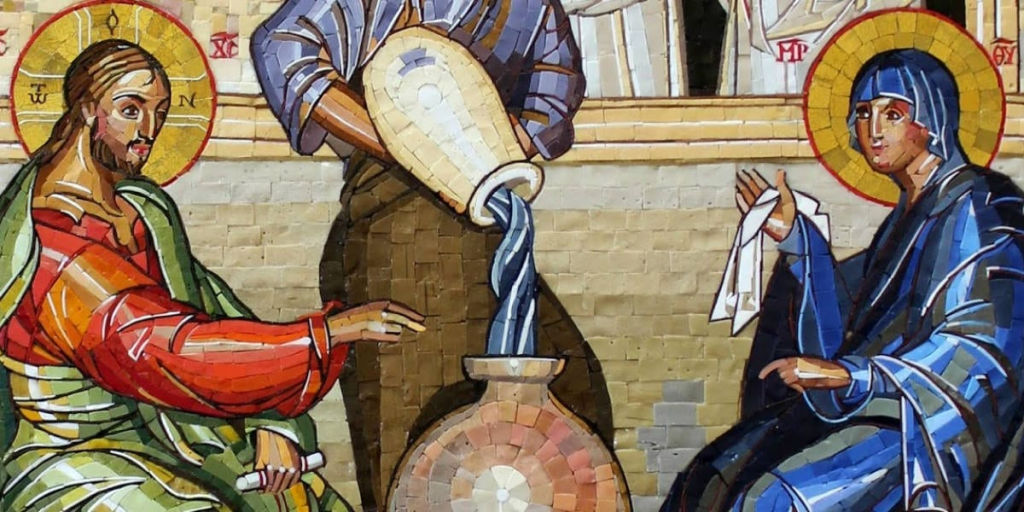
Simple Jars of Wine, Entry #10

Jesus said to the servants,

“Fill the jars with water.” 

And they filled them up to the brim.”

John 2:7, (context, John 2:1-11) 

Turning water into wine? Easy, right? But let’s think for a moment. Molecules have to be drastically moved and profoundly altered, changed completely. They are totally transformed into something they were not. Chemistry says “impossible,” Jesus says “watch Me!”

We are the jars, clay and water. We stand in the hallway, and wait to be filled. But when Jesus comes to our lives, we are transformed. Our watery life becomes full of precious wine. It is our own personal miracle, we are totally transmuted, radically changed.

We are no longer water, but we have become wine. And not just any old wine, but the very best (v. 10). But why does Jesus do this? He is love, this is how He has chosen to operate.

It’s His primary motive (John 3:16,) “God so loved the world…”

But secondly, it is all for His “glory.” He declares His magnificence in us, puny little “clay” pots.

We sit in the hallway, just waiting for His touch. We bring nothing and become ‘everything.’ We are mere water only, until He speaks. Nothing, but now everything. And not just second-rate–but the very best.


“Do not conform to the pattern of this world, but be transformed by the renewing of your mind.”

Romans 12:2