Five K Plus, Entry #42

 But Jesus said, 

“They need not go away; you give them something to eat.” 

17 They said to him, “We have only five loaves here and two fish.” 

Matthew 14:16-17, (context, vv. 14-21)

The people are hungry. The disciples are worried. A very large number had come to listen to Jesus speak/heal. Earlier that day (in verse 14,) He responds and heals all that were sick, ministering to everyone out of deep, deep compassion (also found in verse 14.)

The crowds wanted to see some healings, (which was pretty much their ‘entertainment,’ breaking up a fairly dull existence,) And perhaps some of them scoured the streets to find the really hard cases–just to see if Jesus could pull it off. (“Let’s get ‘Joshua,’ he’s blind, and crippled and a leper besides–he’ll be a real challenge!”)

The dusty day was done (v.15.) The surroundings were “desolate,” and the crowds were getting antsy. But the merchants were happy, they’d sellout and make a bundle! And the disciples–well they were concerned about the crowd dispersing. They hoped that Jesus would dismiss everyone before it got too dark. (Apparently, not only did they forget to bring food, but they left their flashlights at home.)

It’s interesting to note that Jesus seems to look for new ways to teach His disciples. (They need to learn the Kingdom.) Jesus wants them to become involved in this particular miracle. They would distribute the food, and perhaps mingle a bit. (No sidelining for you, Thaddeus.)

And could it be this is how He operates with all of His disciples? Could it be our response all these crazy-life thingees we have to deal with are revealing to us–and to everyone–how deep, and wide, and far our discipleship really does go?

Jesus throws out a challenge, but in order to make this happen, the disciples had to shake down a kid, and take away the lunch mom had packed. All this for two fish, and five loaves of bread. Apparently no one else thought to bring bring any food. Perhaps no one expected it to be a long day, and packing a dinner basket around was a hassle. Who knows?

Five loaves, two fishes.

The official count was 5000, plus the women and children. I imagine that the disciples were a little confused. Maybe intimidated too. Perhaps there was an effort among them to discourage Jesus from keeping the crowd hanging around? “Surely Jesus wasn’t serious, He just needed to understand these things.”

The disciples think taking away the boy’s dinner was completely idiotic in the light of the situation. Then maybe Jesus would then understand all this silliness, and make an announcement that the day was done. The crowd was milling around, perhaps ‘catching up’ with friends and distant relatives–the kids were playing tag nicely for a change. And maybe they stuck around to see if Jesus would heal (or teach) again. They certainly didn’t want to miss the show.

The disciples had already seen a ton of miracles. They had heard tremendous teachings. (Those parables were mystifying though.) But everything about Jesus as the real Messiah seemed to click (at times.) And I do think they understood–at least to a degree. And yet Jesus is stretching His disciples even further into this whole idea of discipleship.

I think Jesus wanted them to learn about the two tools they should use:

  • One–for each one to understand God’s amazing love for people.
  • Two–for them to grasp God’s almighty power in every situation they will face..

The disciples must learn to use these. In order to pull off this idea of making disciples throughout the big blue earth–they’ll definitely need lots and lots of compassion, and a really strong confidence in God’s power. After all they merely had to break through every bit of darkness they came across; and carry in the light. Just like Jesus! Easy, right? (“Holy Spirit, we need all the strength you can spare.”)

The twelve really have to become aware, and snatch up these two–they’re not trivial. They seem to be the very steady heartbeat of discipleship. Understanding these two principles causes the deep nature of the Kingdom to enter these hard human hearts. (Some of us need a ‘transplant.’) We have to apply His compassion again, like a bandage on the wounds. We need to wield His power once more, cutting away the lies.

Both dear one–are really, really needed right now.

“God’s work done in God’s way will never lack God’s supplies.”

-Hudson Taylor, Missionary to China for 51 years

Given Very Little Honor, Entry #41

“Jesus told them,

“A prophet has little honor in his hometown, among his relatives, on the streets he played in as a child.”

Jesus wasn’t able to do much of anything there—he laid hands on a few sick people and healed them, that’s all.”

Mark 6:4, the Message

“For some reason, they hate me.” There’s a real pain that we give each other, especially when it’s on the level of friends and our close family. It seems those relationships are vulnerable, and have the most exposure. When somebody close to us has an issue with us, that pain is deep and lasting. Others well, not so much.

Those closest to us have seen our issues. They’ve seen us at our best, and definitely at our worst. Other relationships are briefer, and they see us, and only subjectively. The salacious details never come out into the open, and we certainly won’t reveal them.

Jesus, the sinless one, faces the same problem in His hometown, the village of Nazareth where He was raised. He has already worked incredible miracles, things that absolutely stagger the imagination. He has raised the dead, healed lepers and cured the paralyzed. He has walked in the light of God unlike anyone who preceded him.

And His teaching? Oh my, no one was ever listen to such marvelous words that describe the Father’s kingdom so well. His words do astonish, and bring absolute light into some pretty dark darkness. The things He says, are astonishing. There has never been anyone like Him.

When Jesus returns to His hometown He discovers an insidious resistance to His words and miracles. People think they ‘know’ Him. A few remember Him playing with their own children–kicking the can, or riding around on the neighbor’s donkey. They ‘think’ they know Him. They really do. But they’re very much mistaken.

But what about our own misconceptions?

There are lessons in this passage we need to learn. Does my idea of Jesus limit or restrict His work? Perhaps we should realize that His miracles often stop when our unbelief begins. Since we think we know Him so well, we think we determine what He can, and cannot do. But seriously, do we truly grasp who Jesus really is?

“Unbelief is not a misfortune to be pitied; it is a sin to be deplored. It’s sinfulness lies in the fact that it contradicts the word of the one true God and thus attributes falsehood to Him.”

-John Stott

Mark 6:4

Two Blind Men, Entry #40

The blind men came to him, and Jesus said to them, “Do you believe that I am able to do this?” They said to him, “Yes, Lord.” Then he touched their eyes, saying, “According to your faith be it done to you.” 

And their eyes were opened. 

Matthew 9:28-30, (context vv. 27-31)

I remember reading a story; more like a sanctified fable but maybe containing a bit of truth? The story (possibly from a French poem?) was that wherever Jesus would walk flowers would bloom in His footprints. I suppose the idea was that wherever Jesus went–life, healing and wholeness happened. It was His footprints; His presence that brought out the very essence of the Kingdom of God.

The love Jesus has for us is that wonderful. His grace–a grace that heals and forgives, a grace that’s now flourishing in the heart of a every real disciple. His mere presence brings us flowers even in the hard times.

Without Him, it seems we’re stuck with plastic roses that really don’t impress anyone. They aren’t real.

Jesus heals these blind men. They are completely without sight. They have understood nothing but blackness, but that is about to be instantly changed, it will come like a switch is flipped. Pop! Instant sight. Suddenly everything floods in. They “see” everything for the first time. Imagine, to be sightless, and then to suddenly see. Colors, trees, flowers, faces, and Jesus all at once. Can you imagine what that must be like?

These men had to have faith–that ‘spiritual ability’ to step out and grasp a healing that hasn’t come yet. They first need to trust the man (Jesus) before the healing can ever be received. “Do you believe I can do this…” I suppose the issue here is identity, the Lord Jesus Christ declaring His authority over this blindness. He intends to heal. It’s His nature to heal.

Wherever Jesus chooses to walk, supernatural things happen. We’re called to trust the person of Jesus, to simply believe Him, and expect Him to keep His word; but whatever happens, happens. Believers will choose to continue to believe, no matter what. They know the difference between real and plastic flowers.

I believe in Jesus’ character–His absolute love for me, and His power over everything. I love Him, and I look for His presence, and suddenly amazing miracles happen. But it’s Him–it’s all Him, and I must put my faith in Him. He does all the work, I’m the lazy guy leaning on my shovel.

But He wants to heal us, that’s His nature. My feeble faith can move things. My mustard seed faith can elevate mountains. It makes wonderful things happen. But that faith has to be fortified, cemented into His heart– we must tell of Jesus’ kindness and mercy and love for those still lost. We must believe in Him to touch others, and then whatever might happen after that will always be His decision. He will always be the Lord either way.

“When human reason has exhausted every possibility, the children can go to their Father and receive all they need. … For only when you have become utterly dependent upon prayer and faith, only when all human possibilities have been exhausted, can you begin to reckon that God will intervene and work His miracles.”

-Basilea Schlink


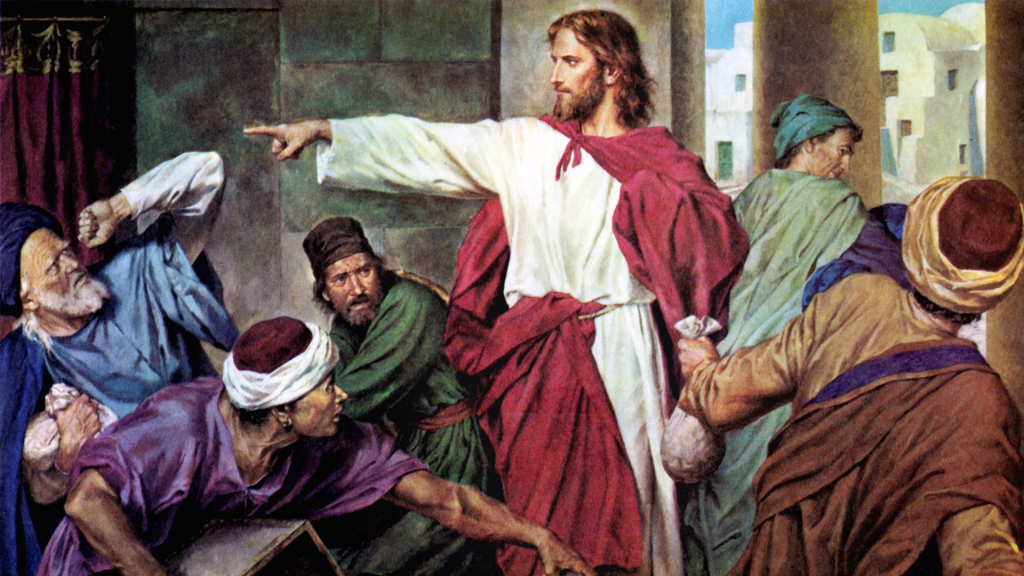
The Doves in the Temple, Entry #11

“And he told those who sold the pigeons, 

“Take these things away; do not make my Father’s house a house of trade.” 

John 2:16, (context 13-17)

The temple was meant to be a place where people could seek and find God. It was meant to be a place of seeking, of sacrifice, and a place of worship. It had no other purpose other than linking man to God. It wasn’t architecture, it was ‘reconciliation.’ The temple was God’s plan of making a way for sinners to engage Him.

Along the line somehow it became corrupted. Unscrupulous man had a way figured to make money off of pilgrims. The temple required temple currency, hence the money-changers who made a tidy little profit. The birds, lambs and bulls were suddenly provided to the worshipers as a convenient way to ‘sacrifice.’ (That made it easier if you had the cash to spend.)

“So he took some rope and made a whip. Then he chased everyone out of the temple, together with their sheep and cattle. He turned over the tables of the moneychangers and scattered their coins.”

John 2:15

Was this wrong? Did Jesus really make a “whip?” Did He really flip over tables like some sort of ‘religious’ brawl from some old western movie? I have to believe He did do this. Chapter 2:17 explains things like this:

“The disciples then remembered that the Scriptures say, “My love for your house burns in me like a fire.”

Jesus loved God’s house, at least for what it was designed for at the beginning. (Some translations use the word, “zeal.”) God’s heart is for fellowship with man. He desperately wants to engage us, to bring us directly into the “holy place of the Holies.”

He wants us there for the companionship. He seeks “friends.”

The doves? Jesus never hurt them. His anger wasn’t directed at them, but rather at the humans who made the birds available to be sacrificed. The Lord didn’t focus His displeasure at those fine feathered ones in the cage, rather He commanded that they be removed from the temple. No whip was used here, only understanding of the need for a kinder approach. (They’re just little birds after all.)

He really wants to fellowship with you. He will do whatever it takes to remove things that should’ve never been there in the first place. He ‘discerns’ the issues, and is very gentle, not an ounce more than is necessary will be applied to your life. He is supremely wise and astonishingly kind.

“Nothing is so strong as gentleness, nothing so gentle as real strength.”

-Francis de Sales