Disheartened, #83

“And Jesus, looking at him, loved him, and said to him, “You lack one thing: go, sell all that you have and give to the poor, and you will have treasure in heaven; and come, follow me.” 22 Disheartened by the saying, he went away sorrowful, for he had great possessions.”

Mark 10:21-22, ESV

Let’s be clear–Jesus really did love him, and that explains a whole lot. In verse 17, we see this man running to Jesus, and he kneels right in front of him. I suppose that this man desperately wanted the Lord’s full attention. He had to know–he must understand. He was a driven man with some very deep questions.

To be wealthy was the clear evidence that God really did love you. If you were rich, you must have God’s approval, and if you happened to be richer than rich–he must love you even more than that. That big bank account was the proof that you were set apart, and completely accepted by God. (Not a whole lot has changed, has it?)

All of this must be understood before we can go any further.

The rich young ruler was suddenly jolted by Jesus’ words–he simply had to give away all his money–and then, to start to follow him. I don’t think anyone had ever dared to confront him like this. Jesus spoke so clearly–and so concisely. The things that came out of Jesus’ mouth cut him like a knife, and then, smashed him like a hammer–they wallopped him hard, and quite honestly, nothing had ever hurt so much.

But dear one, remember this; Jesus always uses a rubber hammer.

The passage told us earlier that Jesus, “loved him” (10:21). Jesus lists five of the 10 commandments, but interestingly enough, the ones that Jesus spoke were the ones written on the second tablet–the ones that dealt with how we treat each other.

Did this man really keep them? Perhaps he may have–maybe yes, maybe no. But knowing human nature, and looking through the lens of God’s word, it was clearly impossible. He may have been seriously conscientious, and maybe he really tried his best to live righteously, but scripture is clear, “all have sinned, all have fallen short of the glory of God” (Romans 3:23).

The text tells us that when Jesus spoke to this man, he issued an invitation, but it also doubled as a command, “come, follow me.” I don’t think that following was as simple as it sounds–and it seems it was the one thing that the rich young ruler couldn’t, or wouldn’t do.

He’d certainly made a valiant effort to be holy, no one could dispute that. But he had to know he was really saved, and he was desperately afraid he wasn’t. This man had a questions that weighed him down–but he must know for sure–he was tied by a golden rope to a heavy treasure chest, and that was something he couldn’t leave behind.

“The fellow that has no money is poor. The fellow that has nothing but money is poorer still.”

Billy Sunday

This man seems to have been ruled by fear. And that is something wealth will do to people. The richest people seem to be the most afraid, and although I admit that seems strange, and perhaps even a bit judgmental, scripture tells us that having possessions often leads one into mortal danger–it’s just the cheese in the mousetrap, (Psalm 49:5).

He ended up “disheartened.” A simple definition of that word means “having lost determination or confidence; dispirited and afraid.” That pretty much describes this man’s state of mind. Jesus had issued a command, and the rich young ruler couldn’t, or wouldn’t, ever meet the terms of Christian discipleship.

Money can be a useful servant, but it’s really a terrible master. That false god–Mammon is an idol, and a deadly one. And that evil god intends to destroy you, if you can’t release your wealth to God. and to others.

“He also did not choose to love God more than his wealth, even though Jesus specifically promised him treasure in heaven. The man was more interested in the earthly treasure of men than in God’s heavenly treasures. This man was essentially an idolater. Wealth was his god instead of the true God of the Bible. He put money first.”

David Guzak

“Most people fail to realize that money is both a test and a trust from God.”

Rick Warren

The Other Nine, #80

Jesus asked, “Were not all ten cleansed? Where are the other nine? 18 Has no one returned to give praise to God except this foreigner?” 19 Then he said to him, “Rise and go; your faith has made you well.”

Luke 17:17-19, (context, vv. 11-19)

He was the unlikely one. Samaritans were at the bottom of the spiritual “food chain.” He was only included in the group because he also was a leper–a person’s religion meant nothing. He was a leper first and foremost, and after all, they do say that “misery loves company.”

The group of ten stood far away, so they had to yell. They “called out in a loud voice, “Jesus, Master, have pity on us!” (verse 13).

The text implies that Jesus never touched them, which is somewhat unusual because Jesus usually did. Their healing was a bit odd as well, as they were healed as they traveled to see the priest. That was one of the many duties the priest had to do, Leviticus 14:2-32.

So it seems that this particular healing wasn’t exactly instantaneous, but something gradual. But still, it required faith, but I have to believe that these guys may have expected something a little more. (But having faith sometimes, isn’t what we expect.)

The ex-leper, a.k.a. the Samaritan, returns and comes back to the One who healed him. The previous verses tell us that he fell at Jesus’ feet. Now tell me–was he “disobeying” the Lord’s command to go to the priest? I’m not so sure. When we consider that he was a Samaritan, and not really part of the Jewish religion or rites, it might make some sense.

He’s not rebuked by Jesus. Instead Jesus turns and in a way, lavishes praise on him. Maybe there is an application here to those we consider to be “outside” of our faith. Sometimes rules get broken by those who we consider on the margins–they seem to be external to our religious sensibilities.

“Your faith has made you well,” is Jesus’ evaluation; he recognizes the essentials that are necessary. Jesus understands the reality of this man’s faith in him–and it’s that faith which has becomes the conduit for his healing.

“Christ will always accept the faith the puts its trust in Him.”

    Andrew Murray

That Fox, #77

 “Go and tell that fox, ‘Behold, I cast out demons and perform cures today and tomorrow, and the third day I finish my course. “

Luke 13:32, (context, vv. 31-35)

Herod’s “accomplishments” were hardly the stuff of a righteous king. He flagrantly committed several very public sins. He wasn’t a good king, as he flouted his authority over the Jewish people. He was regarded as cunning, but weak. Some of his evil things he did is listed below:

  • Signed a decree to murder all the children under two year old and under.
  • Ruled as a “puppet” leader and was given his authority by the emperor Augustus and the Roman government.
  • He permitted Salome to dance before an audience, which was forbidden by the Jewish Law.
  • Ordered the murder of John the Baptist after John confronted him about his evil relationship with Herodias.
  • Turned Jesus over to Pontius Pilate for judgement and execution.

Needless to say King Herod Antipas didn’t have a good track record, he was regarded as a wicked man, and an evil king. He actively opposed any threats to his rule. It’s interesting that he resisted both John, and later Jesus. He was a definite threat to the kingdom of God.

Typically the Pharisees’ and the Herodians’ were on opposite poles, especially when it came to religious and legal matters. It’s quite interesting that they united to oppose Jesus and his ministry. Herod was very superstitious and paranoid–for instance, he believed that Jesus was actually John the Baptist risen from the dead to continue his ministry.

Jesus called him a fox, which certainly wasn’t an endearing description, and described the rule of Antipas as an evil ruler. Usually kings choose a “lion” as their emblem–it represented strength and authority, Jesus refused to recognize Herod in this way. Herod was an evil man, and ruled like a fox.

“To the Jew the fox was a symbol of three things. First it was regarded as the slyest of animals. Second, it was regarded as the most destructive of animals. Third, it was the symbol of a worthless and insignificant man.”

Barclay’s Commentary on the Bible

Jesus is direct and blunt. He knew the character of Herod’s reign, and didn’t mince words when he referred to him. Jesus recognized the evil and “labeled” it. At the same time he seemed to acknowledge the authority of Herod’s reign.

Jesus was well aware of the “timetable” he had. He understood that he had plenty of work to do, and the time that he had to do it. Jesus was definitely aware of Herod’s resistance to his ministry, but wasn’t the least bit intimidated or cowed into silence or fear.

It’s interesting to note that Jesus understood that his death was imminent.

The ministry of Satan often can be seen in the influence of fallen man–it seems the more authority one has over others, the more the enemy can work. Perhaps that’s the awareness that Jesus has. Rather than altering his ministry, Jesus has confidence that he is on God’s timetable. He refuses to be afraid of this wicked king.

“The fear of man lays a snare, but whoever trusts in the Lord is safe.”

Proverbs 29:25, ESV

The King’s Work, #70

 Go your way; behold, I am sending you out as lambs in the midst of wolves. 

Luke 10:3, (context, vv. 1-12)

What happens when lambs are attacked by wolves? My simple guess is that they tear them up. Jesus doesn’t paint a rosy picture of ministry. He’s very clear what the seventy can expect. There shouldn’t be any illusions about the work, it’s not entirely easy, or pleasant. There maybe casualties.

This passage is crucial, not only for Jesus’ disciples, but for the harvest. Seventy-two are selected; they’re given clear instructions on the work ahead–what they must know, and how they need to act. The kingdom of God must be announced, that’s imperative. His rule extends over all, and that dear one, is markedly good news.

They’re given them supreme authority over demons–that’s going to be a necessity for doing his work. There’s an awful lot of darkness out there, and they will engage it head-on. Satan rules temporarily, but God triumphs forever. The disciple’s ministry is to step into this, and extend the kingdom of God. This is now your work.

Doing this means they have to follow his detailed instructions. The disciples are going to move into both the physical and spiritual, and the wolves are coming– the seventy-two have been warned. The world will hate, but the believers still have to preach.

It’s not just a message to preach. There’s more.

Words are not going to be enough. They’re also to have a ministry of physical healing. They’re to touch the sick, and God will heal. But please, don’t misconstrue the work, bloodshed is a real possibility. The wolves are coming in packs.

Jesus is not only training, but he’s extending the Father’s rule by sending them out. He is duplicating himself, and the seventy-two are clearly extensions of him, they’re to be his witnesses, doing his work. Essentially that’s what true ministry is, doing what he would do if he were in your shoes.

The kingdom comes–“thy kingdom come, thy will be done” is the believer’s prayer. We’re committed to this, and we follow our king’s example. The world will be ruled by him, and we have the incredible privilege of being his witnesses–we are his healers, and proclaimers of his gospel.

“The only significance of life consists in helping to establish the kingdom of God.”

Leo Tolstoy

The Whole Truth, #65

“If you abide in my word, you are truly my disciples, 32 and you will know the truth, and the truth will set you free.”

John 8:31-32, (context, vv. 31-47)

There’re several ideas in these two verses which absolutely have to be considered. They can’t be ignored, they’re essentially bedrock. I’m convinced the most astonishing things about God’s Word is that it’s alive. It’s far more than stark dark letters of black ink on white pages. It really breathes and moves in each of us who want to follow Jesus.

The Bible is alive–it has a heartbeat. It simply wants us to get out our spiritual stethoscope and listen.

We sometimes get confused about the word “abide.” It seems like a tricky word, and of course we’ll insist on complicating it, but if he is calling us to follow Jesus – the Word made flesh–means we’ll abide, (to live in, to dwell in, to make your home there) –in that Word. Disciples sometimes won’t do this out of fear of man, or they can’t because of unconfessed sin, or politics, or religion, or philosophy. They’ll become confused about this, and it’s painfully obviously to all.

Imagine, you find a lost wallet in the parking lot. Now what?

You open it to find ten 100 dollar bills! I’m convinced at that certain moment, the Spirit will speak what’s true. You really can rationalize it–possibly this is definitely God’s gift to me (!), or maybe we might look for the driver’s license in order to return this lost wallet to its owner. But it’s a moment of truth, and all of heaven is standing on tiptoe to see what you will do next.

The truth will set you free.” Keeping the money, and ditching the wallet seems like a fine idea at the time, but it’s essentially a seductive trap. If you rationalize this, at this at this point, you’ll fail his test. Your freedom is at stake. What’s true, and what the Spirit is saying, is well on its way of being discarded. (A thousand dollars after all would truly be a blessing? Maybe I’ll tithe off it?)

And maybe the Holy Spirit wants to see what’s really in our hearts, and just maybe a minor angel planted it there, just to show everyone what see what we will do. And maybe it was accidentally dropped, which is probably the case. But what are you going to do? The longer you wait, the trickier it seems to get.

Are you abiding in the words of Jesus? He’s calling you to follow him–and he wants you to become intimate with the real truth, which is really him in the flesh. Disciples who are living out the life of Jesus will act like him. As “abiders” we’ll insist on making his decisions, and becoming truthful people–even if it seems like a disaster.

“Where I found truth, there found I my God, who is the truth itself.”

Augustine

Jesus Knew Who He Was, #61

“So Jesus proclaimed, as he taught in the temple, 

“You know me, and you know where I come from. But I have not come of my own accord. He who sent me is true, and him you do not know. 29 I know him, for I come from him, and he sent me.”

John 7:28-29 (context, vv. 25-31)

Jesus was sure of himself–he fully understood his identity. There was not an iota of self-doubt or awkwardness. He was sure and steady, not at all like us. He spoke like a man who is totally confident about who he was. He walked out an awareness of who he was, and what he must speak.

Jesus had concrete knowledge of who he was, and now is proclaiming it to the people and priests. No one could stop him, he was like a spiritual locomotive. He spoke with total love, wisdom and authority. He spoke as a man who was not bound by religious definitions or ritual.

The temple was the special place were people met God–and God met people. And it’s in this certain place that Jesus now speaks to the crowds.

The issue here is one of identity, Jesus reveals who he really is, but also declares the awesome gap that exists between God and man. “Him you do not know” is the terrible analysis of our heart condition. We are separated and we’re walking in the dark. Romans 3:10-12 explains it like this,

“None is righteous, no, not one;
11  no one understands;
    no one seeks for God.
12 All have turned aside; together they have become worthless;
    no one does good,
    not even one.”

“He sent me,” explains the concentrated effort of God to get our attention. It seems that the Father has gone to extraordinary effort to bring us home to him. Jesus is God’s greatest effort. Jesus Christ was sent to find us, and return us to God.

“Christians believe that Jesus Christ is the son of God because He said so.”

C.S. Lewis

Teaching With Authority, #60

“My teaching is not mine, but his who sent me. 17 If anyone’s will is to do God’s will, he will know whether the teaching is from God or whether I am speaking on my own authority.”

John 7:16 (context, vv. 14-24)

Spiritually, Jesus is superior to everything and everyone. All that he did in the Gospels revealed that salient fact–whether he was healing the sick, walking on water, or teaching the Sermon on the Mount, he had total command. An authority soaked all that he did, just like water saturates a sponge.

The Greek word most often translated “authority” (exousia) in the New Testament basically means: “right, permission, freedom.” Jesus was completely free to do whatever he knew was the Father’s will–he had full and total authorization to do whatever he wanted. (That’s what his baptism was all about.)

Kittel’s Theological Dictionary of the New Testament

The Greek word to “teach” (didaskō) in the NT; it means “give instruction, impart doctrine, to explain.” Jesus’ teaching was a marvel, he explained God’s kingdom to us crisply, succinctly and precisely. All we need to understand was freely given to us in the red letters. Everything necessary to us was taught with confidence and freedom.

Since Jesus perfectly combined the two words, both teaching and authority, he was able to dictate to us everything we need, everything we must have, in straightforward terms. This can’t be stressed enough, the scripture we read–when ignited with the Holy Spirit, seems to be the only thing that can change the human heart.

The preceding verses in this passage reveal the setting for this statement.

  • Jesus stays out of Jerusalem because of the murderous hatred of Pharisees.
  • There was a deep concern by his family who doubted Jesus’ timing and direction.
  • The origin of his teaching was questioned. He was speaking with the authority of the Messiah. Jesus completely understood the true source of his teaching.
  • There was the general consensus of the people. Many were finally arriving at a decision in favor about him. Many would reject him.

We have never seen anyone of his impressive caliber, and we can only imagine the impact he was having on everyone he met. Under the Spirit’s direction, his disciples would retain all that Jesus did and taught. (The author of this passage was the Apostle John, and when you read his letters to us, we see that his memories were quite vivid).

His authority soaked all that he did, just like water saturates a sponge.

So what do we do now? What kind of “lordship” does he have over us? First of all, we learn (slowly) that we MUST teach ourselves to submit to our lord, constantly. He carries the authority we need, the authority human beings require. The Holy Spirit knows exactly how to pierce our pride and independence. Our teacher, comforter (and coach) understands us perfectly.

“His authority on earth allows us to dare to go to all the nations. His authority in heaven gives us our only hope of success. And His presence with us leaves us no other choice.”

-John Stott

Foxes Have Holes, #55

“Foxes have holes, and birds of the air have nests, but the Son of Man has nowhere to lay his head.”

Matthew 8:20 (context, vv. 18-22)

A scribe wants to become a disciple–but he really hasn’t the slightest of what following means. This passage (vv. 18-22) is radical. We find a perspective that stretches and corrects our understanding of life itself. We’re forced to see things from a completely different point of view.

“I wonder if this man thought, ‘Well, now, I am a scribe. If I join that company, I shall be a leader. I perceive that they are only fishermen, the bulk of them; and if I come in amongst them, I shall be a great acquisition to that little band. I shall no doubt be the secretary.’ Perhaps he may have thought that there was something to be made out of such a position; there was one who thought so.” 

-Charles Spurgeon

We find something disturbing here. Jesus and the twelve are living day-to-day without the security of a home. They are homeless. And if we seriously think about the ramifications of following, we are left with this strange idea of a radical renunciation. The Lord Jesus makes it very clear that this is His plan for everyone who asks permission to follow.

“Jesus didn’t tell the man “No, you can’t follow Me.” But He told him the truth, without painting a glamorized version of what it was like to follow Him. This is the opposite of techniques used by many evangelists today, but Jesus wanted the man to know what it would really be like.”

-David Guzik

Sometimes we try hard to understand exactly what this means in the 21st century. But we can never reduce or minimize scripture. If we discover that something grates us the wrong way, that typically means that the scripture has special meaning for us. I have learned that the truth is almost always negative when we first hear it–and I don’t know why this is so.

“All that is gold does not glitter,
Not all those who wander are lost.”

-J.R.R. Tolkien

Who Do You Think I Am? #48

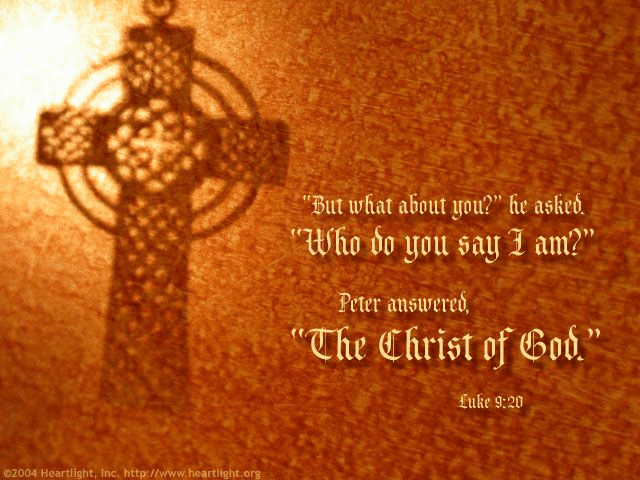
“Who do the crowds say I am?”

“But who do you say that I am?”

Luke 9:18, 20 (context, vv. 18-20)

The question is significant; and it’s never been fully answered. Perhaps each of us must be asked this exact same thing. And perhaps it’s the crucial question that every human being who has ever drawn breath must ask themselves. Who is Jesus? Who is He really?

The crowds had witnessed Jesus feed them with a little boy’s lunch. They saw miracles and heard teaching, and yet maybe they were a bit confused. They could only put Jesus in the context of what they knew was “allowable” by the Pharisees. He definitely was some kind of prophet. Jesus was being evaluated by a very curious crowd.

Jesus isn’t distressed by this, He’s not full of self-doubt or second thoughts. He’s not looking around for our support–or accolades, palms or laurels. He knows exactly who He is. He is the only Son of God, the second person of the Trinity. He is fully and completely God; and He is now wearing a robe and walking around in sandals.

There exists a “crowd faith,” something more or less aware that God cares, and miracles do happen in this life. This is all well and good. But it seems there is a “personal faith,” which Peter now announces out loud. “You’re the Messiah, come from God.”

What Peter declares in front of everyone changes everything.

We must always draw our own conclusions, of course. We must look at Him, and decide for ourselves what He claims to be. There is no question it’s scary, and it’s hard. But you, and you alone, must decide. Crowd faith is almost always good, I suppose; but Peter’s bold declaration is what He really is waiting for. Are you convinced yet?

Mothers and Brothers, Entry #37

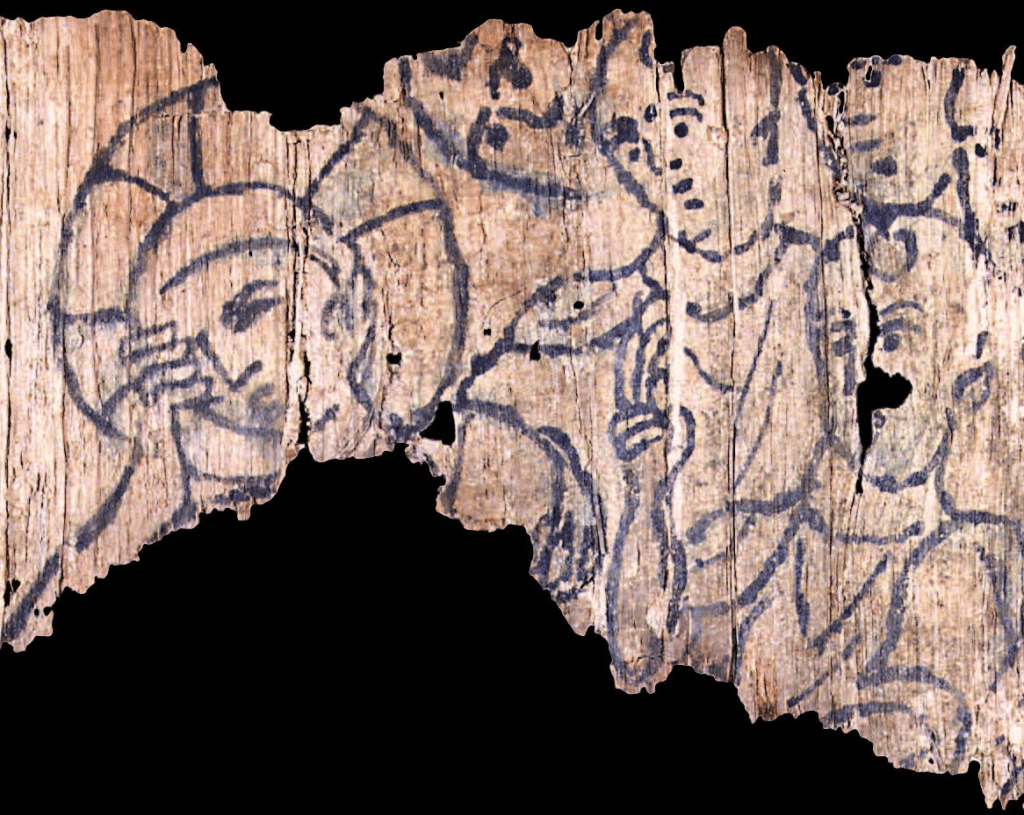
Jesus Papyrus, jerusalemperspective.com

49 And stretching out his hand toward his disciples, he said, 

“Here are my mother and my brothers! “

“For whoever does the will of my Father in heaven is my brother and sister and mother.”

Matthew 12:49-50, (context, vv. 46-50)

His family is spiritual. Earthly connections aren’t what really matters, Jesus expresses an important understanding of the Kingdom of God. Things are not evaluated by physical relationships anymore. Life is different now.

I don’t think Jesus has gone out of His way to alienate His earthly or physical connections to His family. I don’t think He is being rude or uncaring. That isn’t part of His thinking. And yet He does seem to point to something that’s more permanent and everlasting.

It isn’t enough to be His brother, or cousin or uncle. These things really don’t matter. What does matter is being part of His spiritual family. To be painfully honest, it seems to me anyway, that the spiritual relationship is what truly counts. Being Jesus’ disciple, and doing the Father’s will for us transforms us and lifts us up to family ‘status.’

But it doesn’t strictly matter “how” you relate to Jesus so much, but how you do the will of God. That is what impresses Jesus. That’s what He communicates to those who are standing around Him. Do you really understand what is family? Can you grasp the idea that doing the will of God now makes you authentic?

They say “blood is thicker than water.’ Jesus’ blood unites us to Him and each other! Doing the Father’s will turns us into His family.

We must reach out and grab this concept–we are family if we do the will of God, believe in His sacrificial work and immerse ourselves into His purposes. We become His family, spiritually anyway, when we start to do what He wants for us. Am I doing what He wants for me at this moment, or the next, or the next?

Are we really part of His family, or is someone else our father?

“The purpose of the Bible is simply to proclaim God’s plan to save His children. It asserts that man is lost and needs to be saved. And it communicates the message that Jesus is the God in the flesh sent to save His children.”

– Max Lucado