Quenching Our Thirst, Entry #13

“Jesus answered her, 

“If you knew the gift of God, and who it is that is saying to you, ‘Give me a drink,’ you would have asked him, and he would have given you living water.”

John 4:10, (context 4:7-42)

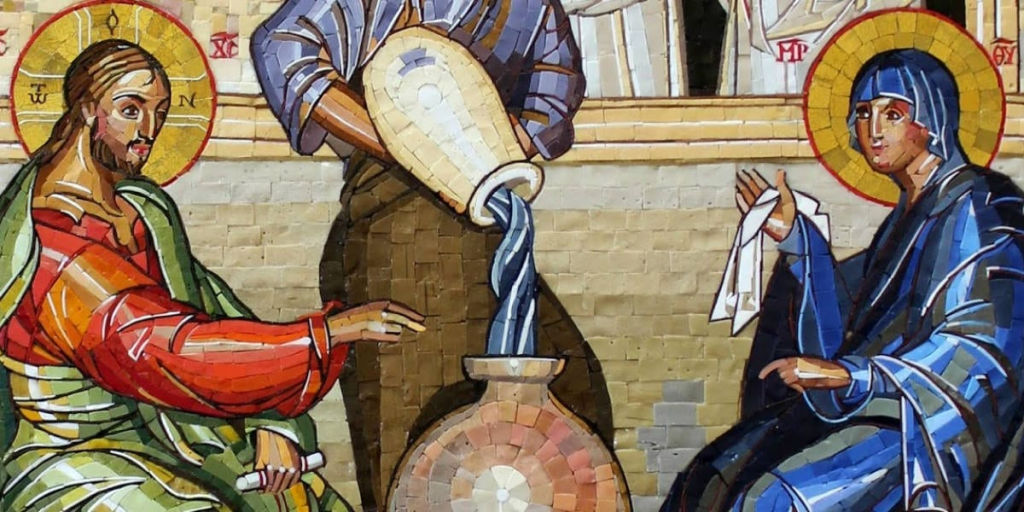
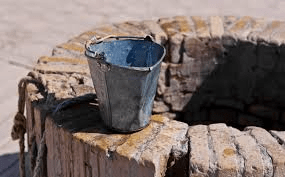
A rusty pail and a very old well. A woman comes to draw out some water from a well dug by Jacob, a patriarch from the pages of Genesis. I believe she was a ‘scarred’ person, she had been married to five men, and she really hadn’t decided to marry #6.

Noon wasn’t the norm, it seems she purposefully waited until the coast was clear. She avoided any contact with others. She would go in the heat of the day. But really deep down, she was ashamed of herself, and grieved over how she had destroyed her life.

She didn’t count on meeting someone at the well, much less a Jewish man who was tired and weary and waiting for a cool drink. She was even more surprised when Jesus spoke to her, that wasn’t proper. A Samaritan woman with a checkered past conversing with a holy Jewish teacher. On heard of.

Jesus waited for her to come, she has an appointment to keep with the second person of the Trinity who was waiting by this well.

“Living water,” how quickly we zoom through this phrase. We seldom stop to consider that what Jesus was offering her was ‘alive.’ It was water infused with life itself. It was water with eternal vitality over sickness, sin or death. When He talks about “living water,” Jesus is referring to Himself.

This particular incident with the woman at the well became the entry point for the ‘good news’ to come to the entire village. Living water would quench the thirst of this backwater Samaritan town.

“People pay attention when they see that God actually changes persons and sets them free. When a new Christian stands up and tells how God has revolutionized his or her life, no one dozes off. When someone is healed or released from a life-controlling bondage, everyone takes notice.”

-Jim Cymbala


Nicodemus Finally Understands, Entry #12

Truly, truly, I say to you, unless one is born again he cannot see the kingdom of God.”

John 3:3 (context vv. 3-15).

He came at night. The questions are burning inside deep inside him and he desperately wants to understand. Nicodemus is a “ruler of the Jews,” (V. 1) and yet it’s not enough. He is unsure and must speak to Jesus, alone and I suppose, “off the record.” Yet he is the rare someone who feels ‘compelled’ to seek God, and will look just about anywhere for an answer.

Nicodemus is a pharisee, “a pure one,” and a teacher of the Jewish people, and yet he is bereft of real answers. He is looking for the missing piece, or maybe something much more then that, but he has to know that it is real and true. There are too many fakes out there after all. He has to know, so he goes to Jesus. Nicodemus needs to understand.

A little baby in a crib, brought to life by a mother’s painful love. It is to this kind of birth that our Lord points to as the very beginning of spiritual life. The real answer to Nicodemus’ questions do not involve ‘rehabilitation’ but rather transformation. Eternal life will not come by personal effort or by ‘working’ for it.

It’ll take nothing less than a new birth to change a person.

Yet somehow Nicodemus is confused by this. He’s trying very hard to “connect the dots” but his mind can’t comprehend the truths Jesus is saying. (A new birth? You’ve got to be kidding.) But Jesus isn’t joking and He isn’t purposefully making it hard for Nicodemus.

New births aren’t possible unless God intervenes. Being freshly birthed is a far cry from being rehabilitated. One is definitely God’s gift of salvation, and the other comes by human sweat and effort. We must understand that we can do nothing that will make us acceptable to God, we can only accept the new birth that He offers us.

It comes not through our effort, but by a repentant faith. We must become spiritually resurrected by believing in His Word, and allowing the Holy Spirit to give us real life. We start completely over it seems, radically receiving a spiritual life. Righteousness doesn’t come through sweaty, ‘grit your teeth’ determination, but by faith alone.

“If anyone belongs to Christ, there is a new creation. The old things have gone; everything is made new!”

2 Corinthians 5:17

Simple Jars of Wine, Entry #10

Jesus said to the servants,

“Fill the jars with water.” 

And they filled them up to the brim.”

John 2:7, (context, John 2:1-11) 

Turning water into wine? Easy, right? But let’s think for a moment. Molecules have to be drastically moved and profoundly altered, changed completely. They are totally transformed into something they were not. Chemistry says “impossible,” Jesus says “watch Me!”

We are the jars, clay and water. We stand in the hallway, and wait to be filled. But when Jesus comes to our lives, we are transformed. Our watery life becomes full of precious wine. It is our own personal miracle, we are totally transmuted, radically changed.

We are no longer water, but we have become wine. And not just any old wine, but the very best (v. 10). But why does Jesus do this? He is love, this is how He has chosen to operate.

It’s His primary motive (John 3:16,) “God so loved the world…”

But secondly, it is all for His “glory.” He declares His magnificence in us, puny little “clay” pots.

We sit in the hallway, just waiting for His touch. We bring nothing and become ‘everything.’ We are mere water only, until He speaks. Nothing, but now everything. And not just second-rate–but the very best.


“Do not conform to the pattern of this world, but be transformed by the renewing of your mind.”

Romans 12:2