The Father, #76

“If I am not doing the works of my Father, then do not believe me; 38 but if I do them, even though you do not believe me, believe the works, that you may know and understand that the Father is in me and I am in the Father.”

John 10:37-38

The Father is in me.” This is one of the clearest passages Jesus uses to explain his ministry. His listeners are doubters. They have decided that he must be executed for blasphemy. In verse 31 we read of their deep, deep anger–“The Jews picked up stones again to stone him.”

It’s crazy how “bad religion” affects people. The Pharisees thought for certain that they were defending God’s honor. They really believed that they were doing exactly what they needed to do. Their religion demanded it.

“I and the Father are one” (v. 30), really disturbed them. Leviticus 24:16 delineated their duty. They must defend God from blasphemers, it was their duty as religious leaders. And Jesus was one of the most egregious offenders that they had ever seen.

This confrontation between them and Jesus was quite intense, and yet Jesus, (instead of backing off) presses the issue. The Father has sent him–Jesus must speak the truth, and there is absolutely no sugarcoating his message. He very clearly states what is real. It has to be believed.

“Believe” is mentioned three times. “Know and understand” are thrown out there for good measure. All explain the necessary components that must be present in a saving faith. And yet, all it did was make them angrier.

I believe that Jesus speaks softly, and with wisdom and compassion–but what is real and true, must be spoken. I really don’t think he “returned” their anger. That would’ve been wrong. And John doesn’t mention it.

“A hot-tempered person stirs up conflict, but one slow to anger calms strife.”

(Prov. 15:8)

“The Father is in me and I am in the Father” explains his ministry, and Jesus can’t, or won’t, compromise his message, or the truth. It is a fact. It’s something you can hang your hat on.

“He is not ‘making himself God’; he is not ‘making himself’ anything, but in word and work he is showing himself to be what he truly is – the Son sent by the Father to bring life and light to mankind.”

Bruce’s Commentary

When they looked at Jesus–they saw the face of God. The Father was living in him–and he resided in the Father. This is the truth, and it blew out their religious circuits. It was something they simply couldn’t accept.


A Crooked Back, #74

Jesus and the Bent Over Woman

“When Jesus saw her, he called her over and said to her, “Woman, you are freed from your disability.” And he laid his hands on her, and immediately she was made straight, and she glorified God.”

Luke 13:12-13, (context, vv. 10-17)

Doctors call it spondylitis ankylopoetica, which produces the fusion of the spinal bones. Sometimes physical issues have spiritual reasons, and many times crippling diseases leave their marks on our hearts. They damage us inside.

Eighteen years is an awful long time.

The response to this astounding miracle was less then ideal. Quite often “religion” responds out of foolishness, and anger at what God wants to do:

“But the ruler of the synagogue, indignant because Jesus had healed on the Sabbath, said to the people, “There are six days in which work ought to be done. Come on those days and be healed, and not on the Sabbath day.” 

(verse 14)

Jesus is angry. He rebukes the hypocrisy of the synagogues leaders. Their livestock get better treatment.

“Of all bad men religious bad men are the worst.”

    C.S. Lewis

“As he said these things, all his adversaries were put to shame, and all the people rejoiced at all the glorious things that were done by him.”

(verse 17)

“Christ is the Good Physician. There is no disease He cannot heal; no sin He cannot remove; no trouble He cannot help. He is the Balm of Gilead, the Great Physician who has never yet failed to heal all the spiritual maladies of every soul that has come unto Him in faith and prayer.”

    James H. Aughey

The Parable of the Good Mormon, #72

“”But a Samaritan, as he journeyed, came to where he was, and when he saw him, he had compassion. He went to him and bound up his wounds, pouring on oil and wine. Then he set him on his own animal and brought him to an inn and took care of him.”

Luke 10:33-34

As I write this, I’m waiting for my plane in Salt Lake City, Utah. I just passed by the Mormon Temple, and that’s always disturbing to me. I guess as a teacher to the body of Christ, to see this much deception concentrated in a place like this is evil. The LDS church has a staggering 16.5 million scattered worldwide. And it’s growing fast.

Back in 1982, two Mormon security guards ushered me off of the temple grounds. But as I was escorted off their temple mount, Christian believers outside the gate gave me tracts to read, and they were praying that I would find the Lord Jesus. Their ministry is hard, but effective,

It’s strange how things work out sometimes.

The road from Jerusalem to Jericho was treacherous, well-known by the people as a haven for robbers and muggers. Think the south-side of Chicago; it was dangerous, and typically when you did have to make the trip, you traveled in a group for safety.

Samaritans were the unholy and the godless. Jews never dreamed of fellowshipping with them–both regarded each other with contempt and scorn. To the Jew, the Samaritan was apostate, and there was a deep distaste for them. And the worse part of it all, they believed that God agreed.

They did respect each others turf though, at least, to a limited degree. At best, they simply didn’t acknowledge the others existence–at worst, they did the jihad thing, and went to outright war with each other. It’s all very complicated. It almost always is.

We must modernize this parable in order to really understand its implications. Let’s make sure we understand a few things though:

  • The Jews and the Samaritan detested each other. Each declared that they were the true nation of Israel.
  • The priest and the Levite both had religious reasons for avoiding situations like this. They quite easily justified themselves, as their interpretation of the Law forbid them from touching a corpse.
  • The Samaritan was doing the will of God, the religious leaders were not. Plain and simple. Jesus’ parable has ruined our conceptions forever of a religion that costs us nothing, and somehow gives us everything.
  • Jesus schools the Jewish leaders with the responsibility of loving each other–no matter what the other person believes is true.

This is a present day parable. It’s lost none of its zing-and we can’t rationalize away any of its authority. It speaks to us today, as powerfully as when Jesus first spoke it. This particular passage has never lost its punch, and we dare not minimize the message. If we do, typically, it’s for carnal reasons, and we do so, it’s at extreme peril to our very souls.

Who is your neighbor? We needn’t look far for understanding–each parable that Jesus spoke was simple, and it could be understood by a child–and yet it carried the full authority, and weight of heaven. If we minimize it, we risk our discipleship. We’ll suddenly cease to be real and authentic.

Is this a Sunday school flannelgraph, or is it a real truth for real believers?

I easily could go on, and on, ad nauseam–pummeling you with insignificant details, but I won’t. The critical message is one of an active, aggressive love for each one who is made in God’s image–for the Catholic and the Mormon, the black and the white, gay and straight, republican or democrat, the homeless and the mansion-dweller–everyone who the Lord God has created. Everyone. (Even illegal aliens–egads. Not them!)

No exceptions can be made. When we serve others–sacrificially, if we have to–we’re really serving the Lord Jesus. And if a Mormon happens along, and if they do what the Samaritan did, they’re doing the will of God. And that disturbs us, and it should.

Then Jesus said to him, “Go and do likewise.”

The King’s Work, #70

 Go your way; behold, I am sending you out as lambs in the midst of wolves. 

Luke 10:3, (context, vv. 1-12)

What happens when lambs are attacked by wolves? My simple guess is that they tear them up. Jesus doesn’t paint a rosy picture of ministry. He’s very clear what the seventy can expect. There shouldn’t be any illusions about the work, it’s not entirely easy, or pleasant. There maybe casualties.

This passage is crucial, not only for Jesus’ disciples, but for the harvest. Seventy-two are selected; they’re given clear instructions on the work ahead–what they must know, and how they need to act. The kingdom of God must be announced, that’s imperative. His rule extends over all, and that dear one, is markedly good news.

They’re given them supreme authority over demons–that’s going to be a necessity for doing his work. There’s an awful lot of darkness out there, and they will engage it head-on. Satan rules temporarily, but God triumphs forever. The disciple’s ministry is to step into this, and extend the kingdom of God. This is now your work.

Doing this means they have to follow his detailed instructions. The disciples are going to move into both the physical and spiritual, and the wolves are coming– the seventy-two have been warned. The world will hate, but the believers still have to preach.

It’s not just a message to preach. There’s more.

Words are not going to be enough. They’re also to have a ministry of physical healing. They’re to touch the sick, and God will heal. But please, don’t misconstrue the work, bloodshed is a real possibility. The wolves are coming in packs.

Jesus is not only training, but he’s extending the Father’s rule by sending them out. He is duplicating himself, and the seventy-two are clearly extensions of him, they’re to be his witnesses, doing his work. Essentially that’s what true ministry is, doing what he would do if he were in your shoes.

The kingdom comes–“thy kingdom come, thy will be done” is the believer’s prayer. We’re committed to this, and we follow our king’s example. The world will be ruled by him, and we have the incredible privilege of being his witnesses–we are his healers, and proclaimers of his gospel.

“The only significance of life consists in helping to establish the kingdom of God.”

Leo Tolstoy

Night is Coming, #69

“We must work the works of him who sent me while it is day; night is coming, when no one can work. As long as I am in the world, I am the light of the world.”

John 9:4-5, (context, vv. 1-12)

Jesus now understands that his earthly ministry is ending. He’s been working a long, hard day, and night is quickly coming. He has been doing what the Father has asked him to do on planet earth–but the work has its limits. The most challenging act of obedience will soon be upon him. Can he endure the shame? Will he really go to the cross–for us?

When he really resides within us, he will glow like a light-stick does in the dark.

It’s starting to get dark, the night is creeping in, and it’s getting to the point where one can’t see to do his work. It seems there are certain limits, one does what he can, as long as he can. Jesus understands this–but there are certain restrictions that must be considered. He will only do what the Father has laid out for him. Nothing more, and nothing less.

Jesus says he is “the light of the world, and I believe him. Oh yes, the darkness is still there–sin, selfishness and pride continue their ugly work. But there’s someone who illuminates everyone around him. When he’s present, he glows like one of those light-sticks.

Peter and two others once saw Jesus catch on fire up on the mountain top, and that’s what his whole ministry was like. When he arrives we can really see–and when he has worked out his earthly ministry, he has done his job.

The most astonishing thing is that he has made believers light, a city on a hill which can’t be hidden, (Matthew 5:14). He does it, not us–never us. It seems that the closer we get to him, the more we’ll shine. And Jesus shows us how to do ministry, in its truest sense.

“If I don’t do the things my Father does, well and good; don’t believe me. But if I am doing them, put aside for a moment what you hear me say about myself and just take the evidence of the actions that are right before your eyes.”

John 10:37, the Message

Sin Always Means Death, #68

“I told you that you would die in your sins, for unless you believe that I am he you will die in your sins.”

John 8:24, (context, vv. 21-30)

Death is defined in a very basic sense, as the cessation of life. You’ll simply stop breathing, and your heart will no longer beat. You’ll be brain dead in a matter of minutes. And perhaps it’s then you’ll suddenly realize that you really do have an expiration date. (Will it be a burial, or a cremation?)

I don’t want to sound morbid. That really isn’t my intention. I know I can be blunt–but please, don’t dismiss this ghoulishness as the prattlings of a really weird person. I sometimes think we really need a jolt; it teaches us to take life a wee bit carefully. Our days are numbered–whether we like it or not.

“Teach us how short our lives are
    so that we can become wise.”

Psalm 90:12

The words of Jesus can be somewhat stark and terribly pointed— It’s silly I know, but there’s something here that feels like you’ve got a pebble in your shoe. It annoys you, but you’ll try pretend its not a real problem, you’ll survive, you’ll do just about anything but sit down and shake it out, or else you’ll learn to walk funny. But he’s now speaking truth to us, and his words are crystal clear, they cut us like a scalpel.

There’s a militancy in verse 24, something that’s granite hard, and it doesn’t flex like we want it to. Spiritual honesty has never come easy to humans, and to be honest, we’ll choose varying intoxicants over what is real. “Truth. You can’t handle the truth”, is a line from a movie that somehow got stuck in my brain.

Experience has taught me that truth is almost always negative when it’s first encountered.

“Unless you believe that I am he you will die in your sins” can be chilling, and if we’re really, really honest it might feel like a steel-toed boot in our solar plexus. It somehow takes the breath right out of us. When Jesus rebukes the Pharisees, they begin to suffocate. They can’t handle what he’s saying, so of course they fall back, they resort to their carnal specialties–accusation and slander.

Believing–that seems like it’s the critical component. I think that Jesus spoke this truth with real compassion. He’s not like us. He’s not fighting back. He simply declares what’s true–and believe it or not, he desperately wants them to believe him. He loves each one of these religious rascals, and because of that–truth has to be plainly spoken–he wants to save their souls.

“If you look for truth, you may find comfort in the end; if you look for comfort you will not get either comfort or truth only soft soap and wishful thinking to begin, and in the end, despair.”

C.S. Lewis


The Very First Stone, #63

“He stood up and said to them, 

“Let him who is without sin among you be the first to throw a stone at her.”

John 8:7 (context vv. 3-10)

The religious police had caught them together, and they held her (just her?) for the express purpose of embarrassing Jesus. Ideally, on the holy grounds of the temple they could challenge him about the Law, and when Jesus tried and failed, they could then humiliate him to the crowds. He would lose a lot in the credibility department (or so they thought.)

“They set a trap for Jesus. If Jesus said, “Let her go,” then He would seem to break the Law of Moses. If He said, “Execute her for the crime of adultery,” then Jesus would seem harsh and perhaps cruel. Also, He would break Roman law, because the Romans had taken the right of official execution for religious offenses away from the Jews.”

-David Guzak

Adultery is expressly prohibited by the seventh of the Ten Commandments (Exodus 20:12) which says simply: “Thou shalt not commit adultery.” There is no ambiguity to this. God had made it clear that adultery was wrong, and she was guilty. (The man she was involved with wasn’t charged–which is a bit interesting.)

Jesus, being sinless, was the only one capable of judgement. Having complete authority he had perfect right to carry out God’s verdict. But he didn’t. He wouldn’t. I suppose that’s why this passage is so evocative to many.

“Woman, where are they? Has no one condemned you?” 11 She said, “No one, Lord.” And Jesus said, “Neither do I condemn you; go, and from now on sin no more.”

John 8:11

All of her accusers had quickly left. Jesus simply wrote something in the sand, and whatever it was, it did the trick. There was no other thing that would of caused them to leave so quietly, and abruptly. They suddenly refused to enforce the penalty of the Law, and just skedaddled.

The adultery was still an issue though, it wasn’t overlooked. Jesus spoke directly to her about it, she wasn’t off the hook yet. “From now on sin no more” is after all a command, and that relationship with her lover must be forsaken. Jesus was serious. What she would choose to do from this point on was critical.

Jesus insists that she understand the why behind them departing so quickly. I think it’s important for her quite specifically, she knew that not only was she forgiven, but that now she could live without guilt or condemnation. The condemners were gone. She was free. Absolutely free.

“Man has two great spiritual needs. One is for forgiveness. The other is for goodness.”

Billy Graham

Crowd Compassion, #46

“I have compassion on the crowd, because they have been with me now three days and have nothing to eat. And if I send them away hungry to their homes, they will faint on the way. And some of them have come from far away.”

Mark 8:2-3, (context, vv. 1-8)

This one differs from the other miracle of feeding found in entry#42, “The Feeding of the Five Thousand,” (Luke 9.)

In that first instance, (see my most very humble entry, #42) the miracle comes as a surprise, more of a reaction to the moment. This second one though, is a tad more ‘contrived’–it’s designed by the Maker to be a lesson for all prospective disciples. It’s not that the first is a complete surprise, rather, it seems anyway, the other is more expected.

He watches over me, and He does keep me. He’s aware of my every need. This must be understood.

I believe everything he does, he does it out of compassion. That’s how His mind operates, that’s what makes him tick, He always acts this way. He is predictable, and you can trust Him, He will never intentionally hurt you. He will lead you through all this crap.

“No matter how low down you are; no matter what your disposition has been; you may be low in your thoughts, words, and actions; you may be selfish; your heart may be overflowing with corruption and wickedness; yet Jesus will have compassion upon you. He will speak comforting words to you; not treat you coldly or spurn you, as perhaps those of earth would, but will speak tender words, and words of love and affection and kindness. Just come at once. He is a faithful friend – a friend that sticketh closer than a brother.”

D.L. Moody

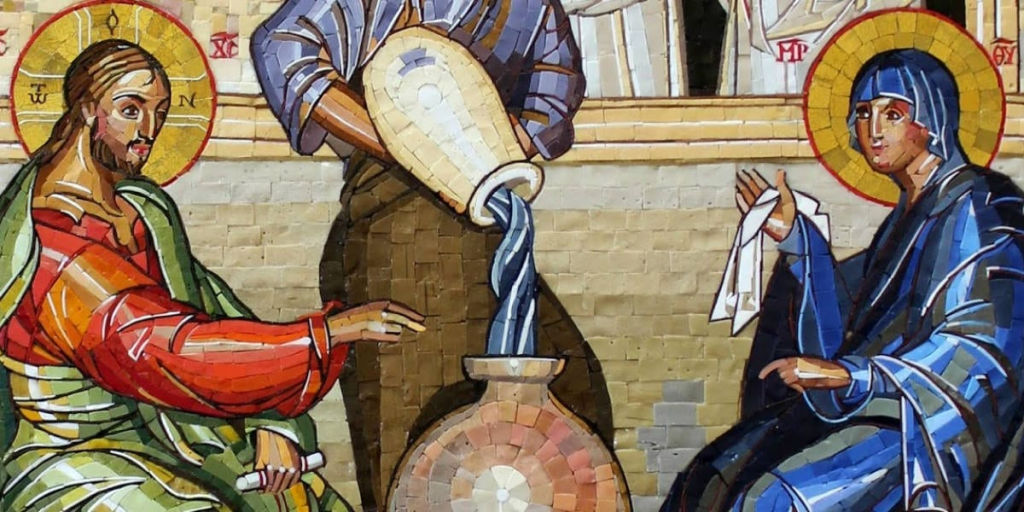
Simple Jars of Wine, Entry #10

Jesus said to the servants,

“Fill the jars with water.” 

And they filled them up to the brim.”

John 2:7, (context, John 2:1-11) 

Turning water into wine? Easy, right? But let’s think for a moment. Molecules have to be drastically moved and profoundly altered, changed completely. They are totally transformed into something they were not. Chemistry says “impossible,” Jesus says “watch Me!”

We are the jars, clay and water. We stand in the hallway, and wait to be filled. But when Jesus comes to our lives, we are transformed. Our watery life becomes full of precious wine. It is our own personal miracle, we are totally transmuted, radically changed.

We are no longer water, but we have become wine. And not just any old wine, but the very best (v. 10). But why does Jesus do this? He is love, this is how He has chosen to operate.

It’s His primary motive (John 3:16,) “God so loved the world…”

But secondly, it is all for His “glory.” He declares His magnificence in us, puny little “clay” pots.

We sit in the hallway, just waiting for His touch. We bring nothing and become ‘everything.’ We are mere water only, until He speaks. Nothing, but now everything. And not just second-rate–but the very best.


“Do not conform to the pattern of this world, but be transformed by the renewing of your mind.”

Romans 12:2