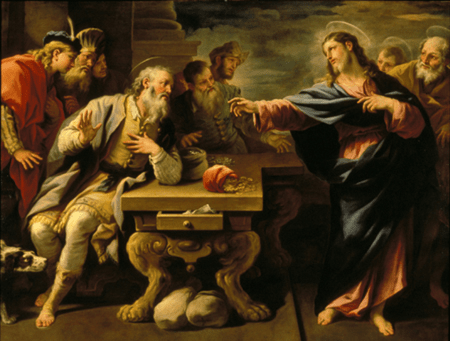
Mary Knows Best, #73

“The Lord answered, “Martha, Martha! You are worried and upset about so many things, 42 but only one thing is necessary. Mary has chosen what is best, and it will not be taken away from her.”

Luke 10:41-42, (context vv. 38-42)

I grew up in America’s rural dairyland–the great state of Wisconsin, with its cheese and bratwurst. Our high-school classes included Agronomy and Animal husbandry. We were taught how to judge cows, pigs, sheep and chickens. I know the differences between a holstein and a brown swiss. To this day, I know what to look for if you need to buy or breed farm animals. Amazing, huh?

I remember our field trips to visit the different farms. I remember once seeing a cow who had a plexiglass “window” that you could see into a cow’s four stomachs, and watch hay as it was being digested. Useful stuff.

The sisters both loved Jesus, of that, I have no doubt. But Martha did the work, and Mary only sat and listened. It was Jesus who understood what was going on. He discerned the frustration of Martha, and knew the eagerness of Mary. Jesus saw inside. He understood them both completely.

He understands your heart, and mine. His sees us as clearly as one would look through a window pane, and he knows everything there is to know. And yet–he will never condemn you. His love for you is limitless, and forever; it won’t ever change, even on your worst days.

One thing means one thing. Not two things, or three. One thing.

One thing have I desired of the LORD, that I will seek: that I may dwell in the house of the LORD all the days of my life, to behold the beauty of the LORD, and to inquire in His temple.”

Psalm 27:4

“When Jesus heard these things, he said to him, “You still lack one thing…come, follow Me.” 

Luke 18:22

“Brethren, I do not count myself to have apprehended; but one thing I do, forgetting those things which are behind and reaching forward to those things which are ahead, I press toward the goal for the prize of the upward call of God in Christ Jesus.” 

Philippians 3:13-14

We must discern what is best. We must look, decide, and judge what needs to take precedence over other things. How and what we decide determines everything. We each get to pick, and to choose, and then we get to live with the consequences. The repercussions of our decision reverberate throughout our whole life, and into the lives of others.

“The one thing needful evidently is that which Mary chose — that good part which should not be taken away from her. Very clearly this was to sit at Jesus’ feet, and hear his word.”

CH Spurgeon

Our decisions determine our destiny. You and I will make a choice. Will you work, or will you sit? You must decide what you should do. I strongly suggest that you decide wisely.

Will you decide to sit at his feet today?

“The way to get the revival is to begin at the Master’s feet; you must go there with Mary, and afterwards you may work with Martha.”

CH Spurgeon

Seeing the Inside, #59

“Do not judge by appearances, but judge with right judgment.”

John 7:24 (context vv. 14-24)

We need to admit that what we see isn’t always the way things really are. Some of our issues come from basic human ignorance, and yet, we need to admit there can be a satanic element. He darkens our perception, so we can’t see reality.

Judging “by appearances” is a thread in our DNA. We see the outside, and we imagine the insides. We’re limited by our failure to see the interior, and our vision is never clear. I suppose this is how it works, we can’t see the inside of things (1 Cor. 13:12.)

“It is the unseen and the spiritual in people that determines the outward and the actual.”

-Oswald Chambers

We must admit our vision is often deceitful. Jesus tells the Pharisees that their analysis isn’t real, they aren’t making holy decisions. They won’t accept him, they rather debate instead believe. The Pharisees’ never could understand Jesus.

But Jesus suggests that there is a real discernment that must be used, but it’ll require bypassing what seems real, or at least what everyone thinks is real. Discerning the difference isn’t always easy, as people are never what they seem. A beggar sleeping under the overpass can have the heart of a king.

Making distinctions is necessary, but typically we evaluate superficially–we see the outside, and the interior goes unseen. With this shallow assessment, the Pharisees’ can’t see beyond anything Jesus taught. They had already decided.

We must have the gift of discernment; the world is confusing and we’ve lost our north star. We’re to be a people of perception, and we need to understand the times and seasons. We must learn prayer, and pray hard. God’s gift of discernment is always given to us for intercession, and never ever for fault-finding.

Me, on a good day.

Negotiating with Jesus, #45

“Then Jesus answered her, “O woman, great is your faith! Be it done for you as you desire.” 

And her daughter was healed instantly.”

Matthew 15:28, (context, vv. 21-28)

Negotiating with God is not for the timid. It takes spiritual guts, and very few do it right. This chapter begins with a strong teaching on Jewish tradition and moral purity. The scribes and the Pharisee’s have cornered the market on social and religious correctness, and they have a solid grip on the Jewish faith. You must do what they say.

Suddenly there’s a noisy commotion, up jumps a Gentile woman who is terribly loud and terribly desperate, she’s caught somewhere between rudeness and hysteria. She has a disturbing need for her daughter to be released from a demon’s control–there’s a satanic oppression that wants to destroy her. Only Jesus can stop it.

The Judaism of Jesus’ day was not doing its job. Israel was meant to be a “light to the Gentiles,” and a source of healing and truth to the nations of the earth. Clearly it had become confused–its traditions and ceremonies that had nothing to do with the salvation of the world.

Perhaps the failure of the Jewish people to reach the world parallels the failure of the Church to carry out Jesus’ Great Commission? Religion has always stood in the way of God’s heart and His plan to bring salvation to everyone. I think this is the main reason Jesus hated it so.

This woman has a need that only Jesus could meet. She embarrasses herself insisting that Jesus take action. She seems almost rude to the point of being obnoxious. She is repeatedly told to be quiet, that her daughter’s deliverance was not in the plan of God. But that’s an answer she will not accept.

How honest are my conversations with God? Do I say what I really think? Do I intercede for others?

This is one of more unsettling verses in the New Testament–at least for me anyway. Everyone in this passage seems somewhat rude, even a bit boorish to me–even Jesus seems off, which really does unsettle me. There’s a stilted awkwardness in this passage that makes me want to apologize about Jesus’ attitude to all my unbelieving friends. I just don’t get all the national, racial, and social issues that are involved here.

An addendum though: Not every scripture is ever grasped once, and for all time understood. I’ve learned there are verses that reveal their layers years later. Onion-like. I think that this is probably true–for me anyway. The same verse will speak to me over and over again.

Forgiveness Finds a Place at Simon’s Table, Entry #36

“And Jesus answering said to him, 

“Simon, I have something to say to you.” 

And he answered, “Say it, Teacher.”

Luke 7:40, (context, 36-40)

This has to be one of my favorite passages of scripture. Simon, who is a Pharisee, has invited Jesus for dinner. I suppose he intends to impress Him, or at the very least he wants to Jesus to look more favorably on his religious sect. It’s simple PR work for him. (Maybe even tax deductible?)

But in comes this woman, and she spoils everything. The ESV translation describes her as a “sinner” and a “woman of the city,” (whatever that means?) She bursts into the dining room wielding an alabaster flask of ointment. She kneels and weeps, and uses the locks of her hair to rub the perfume on the dirty feet of Jesus.

She is crying, and I have to believe she’s very aware of her sin–nobody has to tell her that she has wasted her life. Simon, on the other hand, finds her behavior with Jesus quite objectionable. He’s obviously disturbed by her presence, and he only can only see her outside actions, his vision never really extends to see her broken heart.

And yet Jesus is quite aware of the tension that’s now developing. He’s spiritually sensitive to all that’s swirling around Him, and we see Him jumping at the chance to teach Simon (the Pharisee) a lesson on true forgiveness.

It seems that a certain moneylender had two men that owed him money. One was indebted with just a modest sum; the other was bound by a huge debt. It seems that both men couldn’t repay what they had borrowed. So inexplicably, the lender cancelled the debt of both of them, the little and the big. These men were now free. They owed nothing–not a red cent.

OK now. Who will “love him more?”

Jesus compares the responses of these ‘ex-debtors’ and takes it to a very logical conclusion. “Who will love him more?” Simon obviously understands this line of reasoning, and we hear him responding correctly to Jesus’ lesson on mercy and grace.

Simon realizes there are those out there who are terrible sinners, they are wicked and have walked in sin and darkness for a very long time. They’re irrevocably stained by their sin, it has shaped them to the point that their personalities have been altered. Sadly, they know all of this, and it breaks their heart in two. They tell no one, but God knows.

The schooling Simon receives is the Kingdom logic that corrects his definition of God’s mercy. The kindness that God bestows on us is proportional, those who “owe” much are forgiven much. And as a result they love much.

When you see a person weeping at the altar, overcome by their sense of sin and they seem terribly broken, you’ll understand the love they now have for Jesus. A tremendous debt has been forgiven, and they get up and walk away as free men and women. They now finally understand how to love. They have been forgiven.

“The truth is that there are such things as Christian tears, and too few of us ever weep them.”

― John Stott

A Definite Drunkard, Entry #34

Please think about this image for a second

“The Son of Man came eating and drinking, and they say, ‘Look at him! A glutton and a drunkard, a friend of tax collectors and sinners!’ Yet wisdom is justified by her deeds.”

Matthew 11:19, (context, vv. 16-19)

What part does excessive “eating and drinking” don’t we understand? It doesn’t seem entirely ‘religious,’ especially in the thinking of us who observe the life of a pastor or a shepherd. We demand a certain restraint, a standard of separateness from common sinners. That’s seems to be our personal view anyway.

Is gluttony wrong? Is getting a bit tipsy also unacceptable, especially when it comes to “true” religion? Quite often it seems, we have a pious approach toward what we think is ‘true’ faith. We often believe that truth equates to being an ascetic, separate from common sinners. We believe if we are truly holy we will segregate from the ungodly.

It seems that Jesus doesn’t relate to, or accept this viewpoint. He’s single-mindedly serving the Father, in perfect holiness and in true connection with Him. And yet we see Him cavorting with tax-collectors and sinners. We observe Him actually sitting with those we reject as ungodly or unholy.

I must say this before you start looking for rocks to stone me with!

Scripture clearly tells us that we’re to live holy lives. We’re to be wise and have self-control in everything. We should always remember our own ‘black hole’, and begin to see our new life as really incredible. We must allow the “fruits of the Spirit” to grow inside us. And lived rightly, it’s a place of real holiness; and certainly not the ‘pretend’ righteousness of the Pharisee.

Listen very carefully: The Pharisees reject and label those who seem to flaunt the religious norms, but broken believers will truly forgive others, like those who have been radically forgiven themselves. There is a stark difference.

But think about it, aren’t we all a tiny bit ungodly?

Don’t we somehow grade people by their outward appearance and the level of their attainment? It absolutely astounds me that Jesus seems far more comfortable with the outcasts than He does with the Pharisees of His day. He sits with them, and eats and drinks in a fashion that we would regard objectionable.

Jesus loves every person. He loves the unmade, and the unvarnished. He loves being with the ungodly. Yes, He does understand the awful nature of sin; the horrible damage it inflicts on a person’s soul. And yet I’ve come to the conclusion that all my righteous and holy religion is nothing but a very bad smell in God’s nostrils.

Jesus isn’t afraid that we will somehow taint Him by our words, conduct or behavior. He passionately loves those who we deem as outside the norm of our religion. Jesus loves being with ‘nasty’ people. I think He purposefully seeks out the wrong ones!

It fascinates me that Jesus is never afraid that the leper will corrupt or defile Him. He isn’t fearful that somehow He will be contaminated. That’s exactly what the Pharisees thought. But instead it’s the reverse with Jesus. He heals us, and it’s always a one-way current. He touches us, but we’ll never ‘poison’ Him!

Just maybe our awful failure in evangelism is due to our inability to really relate with the lost. We withdraw and then wonder why the unsaved don’t understand the things of God. Have we become so religious that sinners don’t feel comfortable with us, or Him? Could it be that we’re a bit off course? Are we really filled with His Spirit?

“The greatest form of praise is the sound of consecrated feet seeking out the lost and helpless.”

-Billy Graham

Cold Water, Entry #32

“And whoever gives one of these little ones even a cup of cold water because he is a disciple, truly, I say to you, he will by no means lose his reward.”

Matthew 10:42, (context vv. 40-42)

People are empty, desperate and spiritually dead. I once served Jesus as a “street preacher” in the inner-city of San Francisco. Over and over, I saw the heavy darkness of the city. I was the ‘point-man’ who led a team of believers who were training to do church on the street. Once a dedicated pastor-friend told me he believed that a cult a day was born there. What pain that must bring to God!

People have a tremendous need. They’re waiting, and they are desperately thirsty, and I witnessed it first hand. I saw every weird aberration of truth that floated through the hearts of lost people. At times I began to understand the broken heart of God, and it hurt me inside. I never asked for it. But sometimes He gives it to those who are trying to follow Him.

So, we hand out cold water. We give it to His followers without considering if they’re worthy of it. We freely serve it to Jesus’ “littlest” disciples. Stature in our eyes means zero to God, and yet it somehow means everything to us. Often His grace comes through the small hands of another child of God. That’s the way it’s suppose to work anyway.

“Give, and it will be given to you. Good measure, pressed down, shaken together, running over, will be put into your lap. For with the measure you use it will be measured back to you.”

Luke 6:38, ESV

Rewards will be given. They come to anyone who dares to reach into the life of another. The giver will always be seen by our Lord– everything we do, or don’t do, is lovingly observed by Him. This simple cup of water now has eternal consequences. We can hardly believe it, but it’s true.

“There are many of us that are willing to do great things for the Lord, but few of us are willing to do little things.”

-D.L. Moody


Doing Jesus’ Work, #28

“And proclaim as you go, saying, ‘The kingdom of heaven is at hand.’ Heal the sick, raise the dead, cleanse lepers, cast out demons.”

Matthew 10:7-8, (context vv. 5-15)

Heal. Raise. Cleanse. Cast out. What a job description for Jesus’ disciples! He truly believes that those who follow Him are ready, and it’s time for them to go to work. I suppose they could keep sitting at Jesus’ feet, just soaking up His teaching, and watching Him do His miracles. But this isn’t what they’re called to do. They’ve sat long enough.

Don’t get me wrong. It’s vital that we absorb His words to us. It’s absolutely critical that we hear His voice and really do find our rest in Him. We must intimately listen to Jesus and be filled with His Spirit. Yet it strikes me that far too many disciples think their life is an inward one; a concentration on personal growth and one’s own spiritual attainment. But I don’t think this is the case.

The disciples must go to work.

Jesus ‘commissions’ them to go out and proclaim the ‘Kingdom come.’ The labors of Jesus must be done by these inadequate (and sinful) men. Heal. Raise. Cleanse. Cast out. It’s time for them to go out and meet the desperate needs of the world. But stepping out can be a scary thing.

The works that these disciples are to do are truly marvelous. They now have an ability and an anointing to do remarkable things. Jesus is comfortable that His disciples are ready, and yet knows that when they return they will have much to learn from Him. It seems however, that we are waiting for a certain amount of “perfection” before we step out.

Most of us, I suppose, are ‘hamstrung’ by our own sin. We see know our inadequacies and deep weaknesses. Most of the time we feel completely unworthy. Seldom do we think we’re ready to spread the Kingdom news to a needy world. Our own sin, we believe, disqualifies us from ministry to others. It seems Satan is very quick to neutralize us, and to annul the “work” of the Father. He accuses us, and we listen.

We’re overwhelmed by what we see within us, and as a result we seldom see the needs around us.

It seems we shelf His work and replace our faith into some sort of personal rehabilitation program. “When we are finally holy enough, we will hit the streets.” Until then, we will try to get enough personal purity to work His miracles. Commendable I suppose, but I don’t think this is what Jesus intends. I’m convinced the work itself is a vital part of our sanctification.

“Have thy tools ready. God will find thee work.”

-Charles Kingsley

“Centurion” Faith, #25

Jesus said to him, “I come and heal him.”

Matthew 8:7 (context, vv. 5-13)

See the remarkable faith of a Roman centurion. Can we really fathom the deep depth of such belief? He comes to Jesus with a desire for the healing of a servant. He was doing something that a Gentile would never stoop to do. He sought the healing from a homeless itinerant teacher who happened to be a Jew.

This Roman soldier was an enemy. They occupied the land of Israel. If Jesus decided to withhold a healing (to make a point) this was the time! I’m guessing that His refusal would be a good lesson to the disciples, and the watching crowds.

Although the numbers under the command of the centurion varied, he commonly oversaw up to 6,000 men. In battle, they took position in the very front, they were expected to be the first over a wall or through a breach. The centurion was responsible for every aspect of his men. Every centurion of Rome was expected to display ultimate courage on the battlefield.

Typically it took 15-20 hard years to become a centurion. Service was very difficult, living conditions were rough at best. The centurion was not married, he had no family. To be a centurion’s servant you would be responsible for every aspect of his master’s needs. But most of all, the servants became the centurion’s only family. They stayed with him for the duration of his service.

I suppose this explains much. The servant was paralyzed. The text in Matthew says that he was suffering terribly. No doubt the centurion sought out doctors and treatments, but apparently this didn’t help. He was at wit’s end and really didn’t know what to do. I suppose being helpless will often turn people to Jesus.

Jesus seems to have developed a reputation. Those in need, the desperate, sought out His healing power. It seems like that He was now becoming famous for His ability to heal diseases. It’s interesting but scripture clearly shows that Jesus really didn’t want to be this famous. He repeatedly told people not to tell anyone about their healing.

We can see the centurion’s respect for rank and authority.

He explains his own authority over his own soldiers. When he commands he is obeyed without question. He recognizes command and leadership. This man fully understands, and he clearly acknowledges the ultimate authority of Jesus Christ.

When Jesus heard this, he was amazed and said to those following him,” 

“Truly I tell you, I have not found anyone in Israel with such great faith.”

Matthew 8:10

Emulating this man’s faith is the true task of every believer. We must continually put ourselves under the authority of Jesus. His lordship is to be supreme. His rule over us should never be questioned. He commands everything, and we must obey without any reservation. This new depth of faith must now become our true calling.

A couple of observations. 1) There exists a “quality” kind of faith in comparison to a weaker faith. There seems to be degrees of faith. 2) Quality faith recognizes the true authority and supreme lordship of Jesus. 3) Quality faith can be seen in very strange places. 4) This quality faith is meant to be sought and imitated. It is meant to be recognized by every disciple.

“Just as a servant knows that he must first obey his master in all things, so the surrender to an implicit and unquestionable obedience must become the essential characteristic of our lives.”

-Andrew Murray   

Leaving the Mat Behind, Entry #23

“When Jesus saw him lying there and knew that he had already been there a long time, he said to him, 

“Do you want to be healed?”

John 5:6 (context, vv. 2-9)

He’d been sick for 38 very long years. On this day he was laying like usual in his spot by the pool of Bethesda. He doesn’t realize it, but he was about to encounter Jesus. His life, as he knows it, is about to be turned upside down.

The question Jesus asks is pointed, and it savagely confronts him–“Do you really want to be healed?” Sometimes the sick, the injured, the handicapped become so aware of their issues that they can’t see any life beyond them. Perhaps Jesus wanted to jolt this man with this very odd question; of course he wants to be healed– doesn’t he?

Jesus clearly knew what was happening.

The Lord knew that this man must make a decision, and healing would only come if he could leave his mat behind. Before we get too hard on him though, we should consider that 38 years is a long, long time to be sick. One thing he had learned over time was that having any kind of hope was a very dangerous thing. In these many years he had worn out lots of mats.

Apparently, an angel would come and stir the waters; the first one who somehow jumped in would be healed. Over time the pool became the gathering place where there laid “a multitude of invalids—blind, lame, and paralyzed” (v. 3.) Someone once said that ‘misery loves company.’ The odds for healing however, were definitely not in their favor.

I’m somewhat curious, not so much with the ‘angel/pool’ thing, but with the Lord passing by a crowd of sick people. Jesus didn’t stop and just wholesale heal them, but instead He makes a bee-line to where this man lay. Why did He do this? Perhaps an encounter with Jesus was far too radical for the crowds; perhaps they weren’t ready. IDK.

The question Jesus asks does seem strange– “Of course he wants to be healed.” And yet the Lord (and this man) had to know for sure. It really isn’t a question of Jesus’ healing power–it is however, an issue with one’s desire to be made whole, and then to leave his mat behind.

A disclaimer though.

People will often talk about having enough faith to be healed, and that’s well and good, but what about having faith to continue to be sick; day after endless day? Will we continue to believe in Him no matter what happens to us? I do wonder about this sometimes.

“How sweet the name of Jesus sounds, In a believer’s ear! It soothes his sorrows, heals his wounds, And drives away his fear.”

-John Newton


Let’s Follow the Master, Entry # 21

Luca Giordano
Naples; 1634-1705
The Calling of St. Matthew, c. 1685
oil on canvas; 78.5 x 100.5 inches

As Jesus passed on from there, he saw a man called Matthew sitting at the tax booth, and he said to him, 

“Follow me.” 

And he rose and followed him.”

Matthew 9:9

Another “tax collector.” (Why won’t Jesus ever learn?) It really does seem that He has a definite preference for the scum and the outcast. For some very odd reason that’s the sort of person He likes. But really, do we dare question His wisdom in this? Do we think we have a right to pass judgement on Jesus’ choices?

I have to think that Jesus is showing us His deep fondness for the ‘ungodly.’ Tax-collectors, egads!!!! I don’t really understand, until I consider my own ‘wretched’ life. Until Jesus comes to me, calling me, I will continue to set in my dreary booth, taking money from other dreary people.

So what does it really mean to really follow Jesus?

I think of Matthew, a wicked man who has no qualms about betraying his people for money. It’s always been odd to me, that Matthew’s name meant “pure.” (What were his parents thinking? Maybe they grasped his future destiny as an apostle? IDK.) But I am certain that Matthew’s call to follow meant he had to leave something ‘behind.’

We follow Jesus. We’ve accepted the call that we must turn away from our past life. We’ve left behind all the money and just walked away from our table. We understand that we can’t bring it along; we have renounced its claim on us.

Following Him means taking up our “cross,” and everything that it might entail. We really do need to leave it all behind. What a deal, huh?

“And calling the crowd to him with his disciples, he said to them, “If anyone would come after me, let him deny himself and take up his cross and follow me.”

Mark 8:34