Just a Kernel, #90

A Kernel Becomes Bread

23 “Jesus replied, “The hour has come for the Son of Man to be glorified. 24 Very truly I tell you, unless a kernel of wheat falls to the ground and dies, it remains only a single seed. But if it dies, it produces many seeds.”

John 12:23-24, (context vv. 23-29)

Almost 1/2 of John’s gospel is dedicated to Jesus’ last week. Verse 24 seems to sum up Jesus’ understanding of things, which he now communicates to his disciples. The issue at the center seems to hit on the very core of God’s incredible idea of the Kingdom–death and resurrection.

Perhaps that’s the solid principle behind his way of conducting business. He doesn’t want us to be afraid, and honestly, isn’t the fear of death the most frightening and darkest terror of all? Jesus now turns it around and proceeds to pound it to pieces, and we shouldn’t pick it up and try to glue it back together. Let’s leave it there, and walk away.

Death becomes life. Crazy, huh? And yet he’s explaining how the Father does it. Jesus completely understands this, and it’s his death that will bring life to millions and millions. Oh my, the pain will be real for him. But it’s not really the end of it all. “It’s Friday, but Sunday’s Coming!”

Grasping this becomes the incredible idea that energizes the obedient disciple. It isn’t a ‘Jesus-only’ concept. It’s not exclusively unique to him. I suppose to a degree it is–but isn’t it really part of the economy of God? Isn’t it his particular way of doing things–to extract life out of dead things? (I think he gets a kick out of doing this?)

Brother, don’t be afraid. Sister, he does see your fear and misgivings about dying. In our natural way of thinking, dying is dark and perhaps it might be painful. IDK. But to the person who was been given ‘spirit-eyes’ it now is the way we are to live and bring life. In a weird sense, we’re all Lazarus, and when we hear his voice calling us–we’ll get up and shake off our grave clothes.

“They, then, who are destined to die, need not be careful to inquire what death they are to die, but into what place death will usher them.”


   Augustine

Plain Talk, #79

14 “So then he told them plainly, “Lazarus is dead, 15 and for your sake I am glad I was not there, so that you may believe. But let us go to him.”

John 11:14-15, (context, vv. 1-44)

It’s not easy to speak concisely. Our world is filled with overly careful verbiage, and confusing talk. Often we will complicate things to make them palatable, and comfortable for others. As a ‘writer-wannabe’, I’m aware of bringing confusion when I complicate words, sentences and paragraphs.

Not that being careful and diplomatic is wrong. The book of Proverbs, over and over, makes it clear that our words are powerful things, and they must be carefully watched. What we say, to be astringently honest, communicates what is hidden in our hearts.

Jesus is God’s megaphone in a world that has grown deaf.

The real thing is not what we say, but what we do. Jesus intends to do the impossible. He is going to raise the dead, which has never, ever been done. Jesus intends to simply speak out, simply, and life will come to Lazarus again.

Just as he spoke plainly here to his disciples–he will speak simple words to Lazarus as well. Jesus’ words–very plain and quite simple–will bring life to a body that has laid on a stone slab for four days. The decomposition was already quite advanced. His body, “stinketh.” (John 11:39, KJV).

“When he had said this, Jesus called in a loud voice, “Lazarus, come out!” 44 The dead man came out, his hands and feet wrapped with strips of linen, and a cloth around his face.”

John 11:43-44

Jesus is the Word made flesh. Jesus created the world by words–it is said that he holds the world together by his words. And when he speaks, (or commands), definite things are going to happen.

He’s God’s megaphone in a world that has grown deaf. All that he says is spiritually amplified over the mumbling’s of a confusing darkness. When he stands and speaks to Lazarus, life returns. Jesus is clearly heard in the deep corridors of death, and what he speaks is going to happen.

“And because of his words many more became believers.”

John 4:41, NIV

The King’s Work, #70

 Go your way; behold, I am sending you out as lambs in the midst of wolves. 

Luke 10:3, (context, vv. 1-12)

What happens when lambs are attacked by wolves? My simple guess is that they tear them up. Jesus doesn’t paint a rosy picture of ministry. He’s very clear what the seventy can expect. There shouldn’t be any illusions about the work, it’s not entirely easy, or pleasant. There maybe casualties.

This passage is crucial, not only for Jesus’ disciples, but for the harvest. Seventy-two are selected; they’re given clear instructions on the work ahead–what they must know, and how they need to act. The kingdom of God must be announced, that’s imperative. His rule extends over all, and that dear one, is markedly good news.

They’re given them supreme authority over demons–that’s going to be a necessity for doing his work. There’s an awful lot of darkness out there, and they will engage it head-on. Satan rules temporarily, but God triumphs forever. The disciple’s ministry is to step into this, and extend the kingdom of God. This is now your work.

Doing this means they have to follow his detailed instructions. The disciples are going to move into both the physical and spiritual, and the wolves are coming– the seventy-two have been warned. The world will hate, but the believers still have to preach.

It’s not just a message to preach. There’s more.

Words are not going to be enough. They’re also to have a ministry of physical healing. They’re to touch the sick, and God will heal. But please, don’t misconstrue the work, bloodshed is a real possibility. The wolves are coming in packs.

Jesus is not only training, but he’s extending the Father’s rule by sending them out. He is duplicating himself, and the seventy-two are clearly extensions of him, they’re to be his witnesses, doing his work. Essentially that’s what true ministry is, doing what he would do if he were in your shoes.

The kingdom comes–“thy kingdom come, thy will be done” is the believer’s prayer. We’re committed to this, and we follow our king’s example. The world will be ruled by him, and we have the incredible privilege of being his witnesses–we are his healers, and proclaimers of his gospel.

“The only significance of life consists in helping to establish the kingdom of God.”

Leo Tolstoy

The Devil Made Me Do It, #66

 “You are of your father the devil, and your will is to do your father’s desires. He was a murderer from the beginning, and does not stand in the truth, because there is no truth in him. When he lies, he speaks out of his own character, for he is a liar and the father of lies.”

John 8:44 (context, vv. 42-47)

Satan, Lucifer, Adversary, Prince of Darkness, Beelzebub, Accuser of the Brethren, slanderer, Antichrist, father of lies, troubling spirit, angel of death, the serpent and the Great Red Dragon in the book of Revelation. He has lots of names and titles, all pretty descriptive of his character; and the extensive empire of evil and hate.

Beelzebub means, “Lord of the Flies,” which is really descriptive when you think about it. All that he does is a big pile of caca.

Jesus starts this particular passage with the stark issue of the Pharisees–Jesus said point-blank that they were in league with Satan, that they are only serving up evil. It seems that there something spiritually dark in everything they touch–often it’s hidden. They are Satan’s emissaries to the lost sheep of Israel.

The second part of this verse deals plainly with the devil and his character, Key ideas express his twisted ministry–murder, falseness and a father of lies–a terrible litany of death. This satanic trickery from the Pharisees was two-fold: The first attack was directed at the divinity of Jesus. The second is a bit unsavory; it points at his illegitimate birth. They’re calling him a bastard.

“The religious leaders brought up the issue of parentage by insulting Jesus in John 8:41. Jesus replied by litany their spiritual parentage – they were the spiritual children of the devil. This was evident in that their desires matched the devil’s desires: the desire to kill and deceive.”

David Guzak, enduringword.com

We have to know these things as his disciples. Whether we like it or not.

“There is no neutral ground in the universe; every square inch, every split second, is claimed by God and counter-claimed by Satan.”

C.S. Lewis


This Light’s for You, #64

“Again Jesus spoke to them, saying, 

“I am the light of the world. Whoever follows me will not walk in darkness, but will have the light of life.” 

John 8:12, (context vv. 12-20)

Apart from Jesus, we live in deep darkness. This is painful news to frustrated human beings and is often disputed by the majority. History points to different illusions of attainment. (And there are many five year old’s who still believe in Santa Claus.)

History tells us things, and so does scripture. Most of us are able to give off some light, but in our fallenness the best is just more darkness. Light isn’t possible without Jesus, who is called “the light of the world.”

We might be trained in a discipline or field, but really, at its best, we’re starting to realize that it’s just dark journey into a foggy gloom. We may be a physics or literature professor–but Jesus declares that “the light of the world.” Nothing we can do will change the fact.

It’s interesting that those who follow him, “will have the light of life.” I like the Message translation of John 8:12.

“Jesus once again addressed them: “I am the world’s Light. No one who follows me stumbles around in the darkness. I provide plenty of light to live in.””

“Plenty of light to live in,” That’s his strong point, and that’s why it’s critical that we seek Jesus first and foremost. He shares this light with us, and to be actively energized by the LORD insures real life, peace, and spiritual success. And as he shares, we will transmit. He is the light, and we hope we can be the shiny mirrors.

We can only be light if the switch is turned on, it does nothing on its own. All it does is let the electricity flow through it, simply allowing a connection to be made. It seems that this is the believer’s role. When we pray, or when we worship authentically, the connection is made. Stand back and expect light.

When we finally let this light radiate through us, we won’t have to say a thing–it’s bright and it’s supernatural. Lighthouses don’t fire a cannon to call attention to their shining–they just shine. And now is an especially good time to blaze.

“The fundamental principle of Christianity is to be what God is, and he is light.”

John Hagee

The Plow, #56

“No one who puts his hand to the plow and looks back is fit for the kingdom of God.”

Luke 9:62 (context, vv. 57-62)

Every disciple has his plow. Sometimes it’ll be obvious, everyone sees it; other times it’ll be buried deep inside, and no one knows. A plow is a perfect word to describe exactly what the Holy Spirit is doing–and its descriptive of the determination of a disciple who is slowly learning how to follow.

When you’re trying to grow-up you’ll grasp this foundational lesson. You have to be single-minded and really focused to stay moving ahead. You cannot look behind at what has been done. You can’t turn around to admire your work, rather we look at the tree that is keeping us lined up with Jesus.

You will sweat and get tired. Your full effort is needed to keep the plow in the hard earth. You aren’t pushing, the oxen is pulling, but you’re the one who weighs it down while keeping your furrow relatively straight. It’s harder than it looks. (Thank God for the modern tractor.)

In case the plowman starts to look back, his plow line would become crooked. If that happens, the field he is plowing will not yield a full harvest. A good plowman has learned he must hold on. In following Jesus, we are to keep our eyes on Him, and never let our minds and hearts wander away. (Hebrews 12:1-2.)

“To keep our hand on the plow while wiping away the tears–THAT is Christianity.”

-Watchman Nee

To follow means looking and moving forward. We must understand this–it’s the very essence of walking a path. We’re walking out the journey. Sometimes we feel Jesus’ joy as His follower, but occasionally we won’t. We’re learning to understand it more and more. But no matter what, we keep putting heel-to-toe. We are followers after all.

Jesus lived this; He steadfastly set His face to go to Jerusalem (Luke 9:51).

“To learn strong faith is to endure great trials. I have learned my faith by standing firm amid severe testings.”

-George Mueller

A Really Hard Reality, #53

30 “They went on from there and passed through Galilee. And he did not want anyone to know, 31 for he was teaching his disciples, saying to them,” 

“The Son of Man is going to be delivered into the hands of men, and they will kill him. And when he is killed, after three days he will rise.” 

32 But they did not understand the saying, and were afraid to ask him.”

Mark 9:30-32

There are no illusions found in these verses. This passage is painfully practical, and whenever I read it I’m forced to take another slug of reality–Jesus will die. Evil men will kill Him. I don’t want to see His ministry end like this. Deep inside, I want to His ministry to continue. I need to hear more parables, and see more miracles.

But thinking squarely isn’t always my best point. I sometimes like illusions. They seem like necessary padding for the stark rigors of living. They’re nice to have around. But I do know that gripping reality is needed. It’s harsh and rude, and some of us avoid it like vampires dodge picnics.

The disciples must get real and extend their thinking about the Kingdom. They’ve been witnesses to all those supernatural things that the Messiah is doing. It’s all been very good. But now they must think deeper, and even more redemptively. Jesus will-must die, and He will rise. Why?

The Holy Spirit is always pouring love on us. I know that all that He does is done by love. Whether it’s touching a leper or feeding 5000, it’s love that is Jesus’ reason and clearest motive. Easily seen in these amazing miracles, and somewhat harder to picture when it comes as betrayal and murder. (God help us adjust.)

Jesus will (must) die. That is His accurate prediction. The disciples must clear the decks and assimilate this fresh information. They’re needed to grab this and make it part of their understanding. They are now witnesses, completely and wholly grasping the deepest realities of the Kingdom.

The gospel of the Kingdom up to this point is indeed a wonder. Teachings and healings, miracles and resurrections are becoming the norm. We all want to see them continue. We are shocked when Jesus takes this morbid perspective! How perfectly awful. (NOT the way to win disciples!)

The death of Jesus Christ, and His resurrection, is the next necessary miracle. It is needed to redeem and ‘heal’ the entire world. Oh yes, Jesus touched a leper, forgave the whore and raised the dead–but these are miracles that primarily touched individuals. He intends to kick it up a notch.

Jesus is going to die for us all. Isn’t that outrageous?

Negotiating with Jesus, #45

“Then Jesus answered her, “O woman, great is your faith! Be it done for you as you desire.” 

And her daughter was healed instantly.”

Matthew 15:28, (context, vv. 21-28)

Negotiating with God is not for the timid. It takes spiritual guts, and very few do it right. This chapter begins with a strong teaching on Jewish tradition and moral purity. The scribes and the Pharisee’s have cornered the market on social and religious correctness, and they have a solid grip on the Jewish faith. You must do what they say.

Suddenly there’s a noisy commotion, up jumps a Gentile woman who is terribly loud and terribly desperate, she’s caught somewhere between rudeness and hysteria. She has a disturbing need for her daughter to be released from a demon’s control–there’s a satanic oppression that wants to destroy her. Only Jesus can stop it.

The Judaism of Jesus’ day was not doing its job. Israel was meant to be a “light to the Gentiles,” and a source of healing and truth to the nations of the earth. Clearly it had become confused–its traditions and ceremonies that had nothing to do with the salvation of the world.

Perhaps the failure of the Jewish people to reach the world parallels the failure of the Church to carry out Jesus’ Great Commission? Religion has always stood in the way of God’s heart and His plan to bring salvation to everyone. I think this is the main reason Jesus hated it so.

This woman has a need that only Jesus could meet. She embarrasses herself insisting that Jesus take action. She seems almost rude to the point of being obnoxious. She is repeatedly told to be quiet, that her daughter’s deliverance was not in the plan of God. But that’s an answer she will not accept.

How honest are my conversations with God? Do I say what I really think? Do I intercede for others?

This is one of more unsettling verses in the New Testament–at least for me anyway. Everyone in this passage seems somewhat rude, even a bit boorish to me–even Jesus seems off, which really does unsettle me. There’s a stilted awkwardness in this passage that makes me want to apologize about Jesus’ attitude to all my unbelieving friends. I just don’t get all the national, racial, and social issues that are involved here.

An addendum though: Not every scripture is ever grasped once, and for all time understood. I’ve learned there are verses that reveal their layers years later. Onion-like. I think that this is probably true–for me anyway. The same verse will speak to me over and over again.

Mothers and Brothers, Entry #37

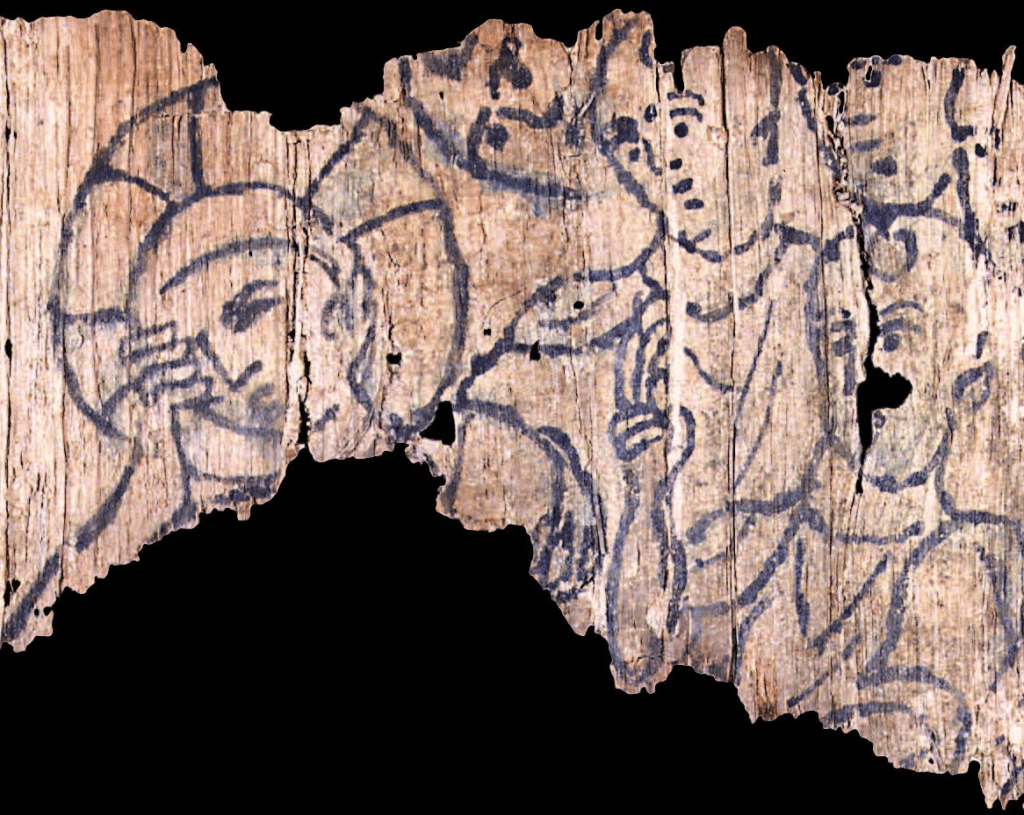
Jesus Papyrus, jerusalemperspective.com

49 And stretching out his hand toward his disciples, he said, 

“Here are my mother and my brothers! “

“For whoever does the will of my Father in heaven is my brother and sister and mother.”

Matthew 12:49-50, (context, vv. 46-50)

His family is spiritual. Earthly connections aren’t what really matters, Jesus expresses an important understanding of the Kingdom of God. Things are not evaluated by physical relationships anymore. Life is different now.

I don’t think Jesus has gone out of His way to alienate His earthly or physical connections to His family. I don’t think He is being rude or uncaring. That isn’t part of His thinking. And yet He does seem to point to something that’s more permanent and everlasting.

It isn’t enough to be His brother, or cousin or uncle. These things really don’t matter. What does matter is being part of His spiritual family. To be painfully honest, it seems to me anyway, that the spiritual relationship is what truly counts. Being Jesus’ disciple, and doing the Father’s will for us transforms us and lifts us up to family ‘status.’

But it doesn’t strictly matter “how” you relate to Jesus so much, but how you do the will of God. That is what impresses Jesus. That’s what He communicates to those who are standing around Him. Do you really understand what is family? Can you grasp the idea that doing the will of God now makes you authentic?

They say “blood is thicker than water.’ Jesus’ blood unites us to Him and each other! Doing the Father’s will turns us into His family.

We must reach out and grab this concept–we are family if we do the will of God, believe in His sacrificial work and immerse ourselves into His purposes. We become His family, spiritually anyway, when we start to do what He wants for us. Am I doing what He wants for me at this moment, or the next, or the next?

Are we really part of His family, or is someone else our father?

“The purpose of the Bible is simply to proclaim God’s plan to save His children. It asserts that man is lost and needs to be saved. And it communicates the message that Jesus is the God in the flesh sent to save His children.”

– Max Lucado

The Easy Yoke, Entry #35

“Come to me, all who labor and are heavy laden, and I will give you rest. Take my yoke upon you, and learn from me, for I am gentle and lowly in heart, and you will find rest for your souls. For my yoke is easy, and my burden is light.”

Matthew 11:28-30, (context, vv. 25-30)

I have thought some on these two verses; I’ve come to the conclusion that it really must be understood as a holy ‘invite.’ A gracious bidding to come to Him, to find much needed rest, and discover meaningful work. This is a gentle summons to blend both rest and work and then live it out in our lives.

Jesus is aware of my weak and faltering steps. I stumble a lot, I weave and trip often. Yet He never criticizes me, He finds no fault, but matches His steps to mine. On His own, Jesus could do the work much faster. But He insists we stay yoked, connected with each other. This amazes me.

The moment we do this we’ll understand that the combination of these two will always balance and correct us. It will pour out of us love, grace and gentleness. The fruits of the Spirit can be seen, and we become salt of the earth.

He invites us to come and be yoked, and to enter into true rest, and true work.

“Thou hast created us for Thyself, and our heart is not quiet until it rests in Thee.”

-St. Augustine